
Stop the struggle! Learn how to bathe a cat without getting scratched using our 6-step stress-free guide. Master feline anxiety management, claw trimming, and safe grooming techniques on PetBehaviors.
It’s the ultimate dread for every cat owner: bath time. While cats are excellent at self-grooming, sometimes a bath is necessary. The biggest challenge is learning how to bathe a cat without getting scratched. At PetBehaviors, we understand feline anxiety and offer a stress-free guide to keep both you and your cat safe.
You cannot rush a cat bath. Before you even turn on the water, gather all your cat grooming tools:
Pet-safe shampoo (never use human shampoo).
Several soft towels.
A large cup or pitcher for rinsing.
A non-slip mat for the tub.
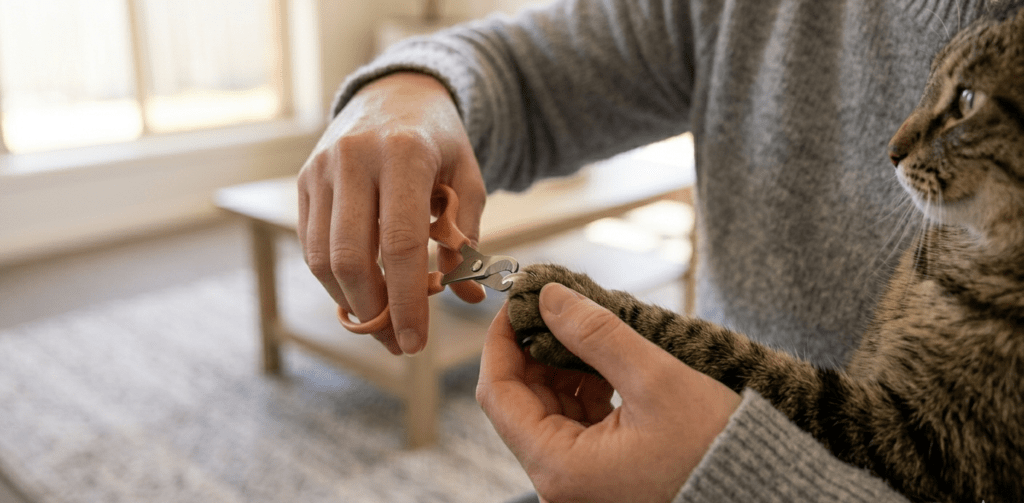
Crucial Tip: The single best way to prevent scratches is to trim cat claws a day or two before the bath.
1. Create a Calm Environment Minimize noise and keep the room warm. Reducing environmental stressors is key to lowering your cat’s panic levels.
2. Use the Right Water Temperature Cats have a higher body temperature than humans. The water should be lukewarm—test it on your wrist. Use only a few inches of water.
3. Gentle Introduction Place the non-slip mat in the tub. Slowly lower your cat into the water. Talk in a soothing voice. Avoid getting water in their eyes or ears.
4. Lather Carefully Apply the pet-safe shampoo, working from the neck down to the tail. Be very gentle around the belly. This is where most cats get defensive.
5. Rinse Thoroughly Use the cup or a low-pressure spray to rinse all the soap away. Soap residue can irritate their skin and increase feline anxiety later.
6. Drying a Cat Safely Immediately wrap your cat in a large, warm towel. Pat them dry. Avoid using a loud hairdryer, which can terrify them. Keep them indoors until they are completely dry.
f your cat becomes extremely agitated, you may need to practice scruffing a cat (gently holding the loose skin on the back of the neck) to immobilize them briefly. Use this only as a last resort and never apply full weight.
Learning how to bathe a cat without getting scratched is about trust and technique. With patience, bath time can become a manageable routine. For more cat behavior and pet grooming guides, stay tuned to PetBehaviors.com.