
If you are worried about your dog licking floor obsessively, you aren’t alone. This strange behavior often points to digestive upset or a lack of vitamins.
It can be a baffling and frustrating sight to see your pet focused on the ground for minutes at a time. I remember my own Golden Retriever, Bella, who would spend hours licking the kitchen tiles until they were soaked. Initially, I thought she was just looking for food scraps, but it turned out she was suffering from severe Acid Reflux.
If you find your dog licking floor obsessively, you aren’t alone. In the veterinary world, this is often referred to as ELS (Excessive Licking of Surfaces), and it is usually a cry for help regarding their internal health or mental state.
I once worked with a Golden Retriever named Bella who would spend hours licking the kitchen tiles until they were soaked. Initially, I thought she was just looking for food scraps, but it turned out she was suffering from severe Acid Reflux. This is why it’s so important to look deeper than just the behavior itself.
The most common reason for a dog licking floor obsessively is gastric distress. When a dog feels nauseous or has acid reflux, they instinctively lick surfaces to help them swallow or to induce vomiting to clear their stomach. However, there are several other compulsive behaviors and medical reasons to consider.
The most common reason for a dog licking floor obsessively is nausea or gastrointestinal upset. When a dog feels a burning sensation in their esophagus or stomach, they instinctively lick cold, smooth surfaces. This action stimulates saliva production, which helps neutralize stomach acid.
2026 Fact: Recent studies show that over 70% of dogs displaying ELS have underlying GI issues like Irritable Bowel Syndrome (IBS) or Giardia.
Sometimes this nausea is a side effect of medication, similar to how a dog acts weird after flea treatment due to chemical sensitivity.
If your dog is licking non-porous surfaces like tile or metal, they might be experiencing Pica. This is a condition where animals crave non-food items to compensate for a lack of minerals in their diet.
Mineral Gap: In 2026, many homemade or “raw” diets lack specific trace minerals like magnesium or zinc, causing dogs to seek these out by licking the floor.
Expert Tip: Check if your dog’s gums are pale; this could indicate anemia, another trigger for obsessive licking.
Just like humans bite their nails when nervous, dogs use licking as a self-soothing mechanism. This releases endorphins that help them cope with stress.
OCD in Dogs: If the licking happens at the same time every day (like when you leave for work), it is likely a compulsive behavioral disorder.
If your dog is also snapping at the air or jumping suddenly, they might be reacting to something poking them—a neurological sensation that increases anxiety.
While most licking is chronic, some cases are emergencies. Contact a vet if you see:
Bloat (GDV): If the licking is accompanied by a hard, distended stomach and unproductive retching.
Neurological Decline: If you notice your dog’s back legs are giving out while they are obsessively licking, this could indicate a spinal or brain issue.
Small, Frequent Meals: To combat acid reflux, break your dog’s daily food into 3 or 4 smaller portions.
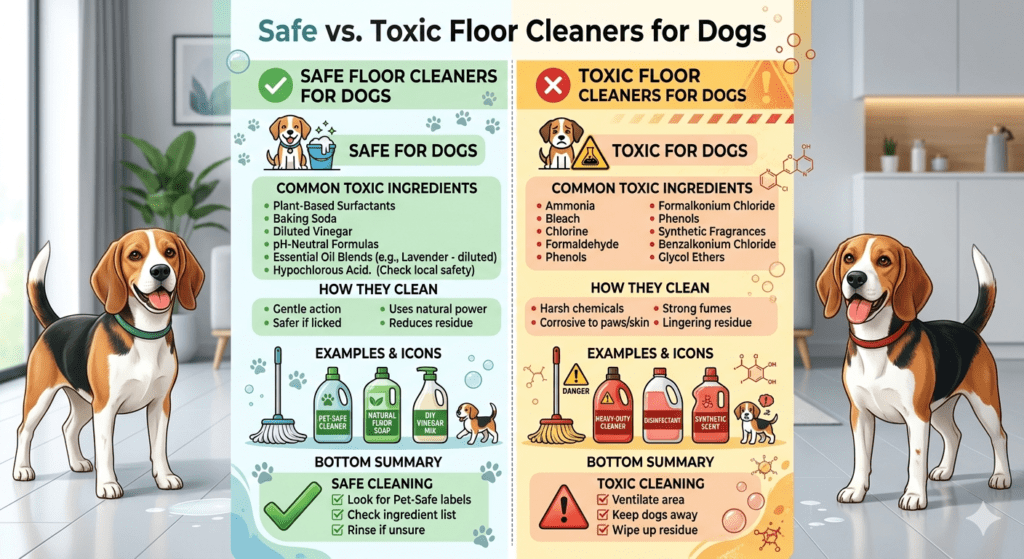
Safe Cleaning: Switch to natural cleaning products like diluted vinegar. Many commercial floor cleaners contain chemicals that actually attract dogs to lick them, which can lead to poisoning.
Redirection: Provide a “Lick Mat” with peanut butter or plain Greek yogurt to satisfy their oral urge in a healthy way.
No. Carpet licking is dangerous because the fibers can get trapped in the digestive tract, leading to a life-threatening intestinal blockage.
Yes. High-energy breeds like Shepherds or Border Collies often develop “stereotypical behaviors” like floor licking if they don’t get enough physical exercise and mental stimulation.
This is a classic sign of post-prandial acid reflux. The food is triggering a rise in stomach acid, and the licking is the dog’s way of trying to “swallow down” the discomfort.
Absolutely. Dogs are highly sensitive to scents. If you recently changed your floor cleaner, your dog might be reacting to the new residue or the “sweet” smell of certain chemicals.
At the end of the day, your dog’s mouth is their primary way of communicating. Licking the floor is rarely about the floor itself—it’s about how they feel inside. For a deeper look into dietary-related licking, you can consult the PetMD Guide on Pica in Dogs.