Is your dog’s breath unbearable? Learn how to get rid of dog bad breath with 5 natural remedies and master canine dental hygiene to prevent serious health issues on PetBehaviors.
It is a common misconception among pet parents that “dog breath” is just a natural part of owning a canine. While a dog’s breath will never smell like mint, a foul, pungent, or sweet odor coming from their mouth is a clinical condition known as Halitosis. In more than 80% of dogs over the age of three, persistent bad breath is the primary warning sign of active periodontal disease. Left unchecked, the bacteria in your dog’s mouth can enter their bloodstream, damaging their heart, kidneys, and liver.
I once treated a miniature Poodle named Barnaby whose breath was so foul it filled the entire examination room. His owners assumed he had just eaten something gross in the yard. However, upon oral examination, we found severe tartar buildup and a deep infection under his upper premolars. After a professional veterinary dental scaling and removing two decayed teeth, Barnaby’s breath went back to normal, and his energy levels doubled because he was finally free from chronic oral pain.
To eliminate bad breath permanently, you must address the specific underlying issue causing the volatile sulfur compounds (VSCs) to form in your dog’s mouth.
Periodontal Disease: Plaque and saliva mix to form calculus (tartar). This provides a porous surface where anaerobic bacteria thrive, inflaming the gums (gingivitis) and destroying the bone structure supporting the teeth.
Dietary Indiscretion: Sometimes, the cause is what they consume outside. If you are constantly trying to figure out why is my dog eating grass, dirt, or animal feces in the yard, their bad breath is likely coming from these non-food items decomposing in their oral cavity or stomach.
The specific scent profile of your dog’s breath can occasionally alert you to an internal medical emergency that has nothing to do with their teeth.
Sweet or Fruity Breath: This is a classic sign of Ketoacidosis, a life-threatening complication of feline or canine diabetes.
Urine or Ammonia Scent: If their breath smells like urine, it indicates that their kidneys are failing and are no longer filtering metabolic waste products from the bloodstream.
Foul, Vomit-Like Odor: A putrid, rotting smell accompanied by acute stress signals can point to a gastrointestinal blockage or severe digestive distress. This metabolic strain can trigger sudden behavioral panics, complicating how you handle a dog with separation anxiety if they are left alone while dealing with internal physical pain.
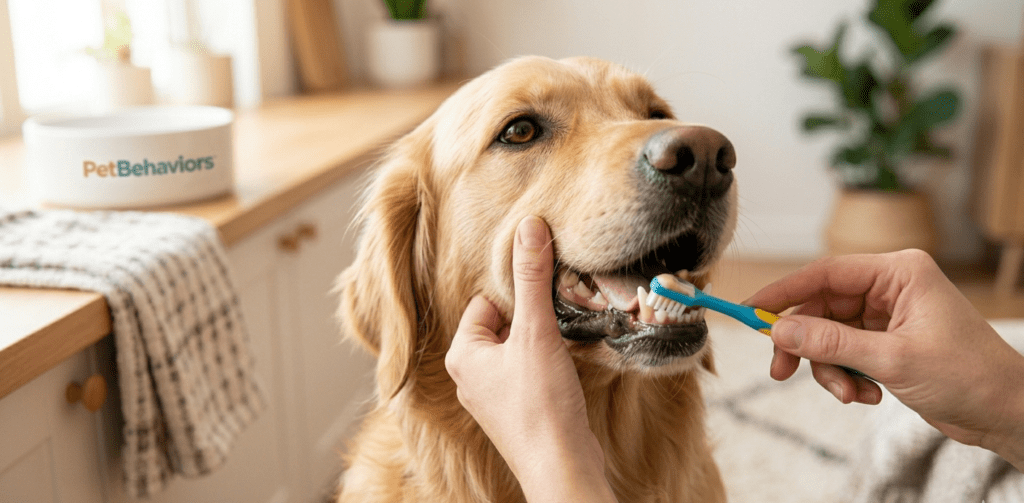
Brushing your dog’s teeth is the gold standard of home dental care, but it requires a structured, cooperative approach so your dog doesn’t become defensive.
Desensitization to Handling: Never force a toothbrush into a resistant dog’s mouth. Use the progressive marker concepts highlighted in our in-home dog training tips to reward your dog for letting you lift their lips, touch their gums with a finger, and eventually introduce a finger-brush with poultry-flavored enzyme toothpaste.
VOHC Approved Products: When sourcing water additives, dental chews, or gels, always look for the Veterinary Oral Health Council (VOHC) seal of acceptance to ensure the product is scientifically proven to retard plaque and tartar.
Never use human toothpaste on a dog. Human toothpaste contains foaming agents like Sodium Lauryl Sulfate (which causes stomach upset when swallowed) and Xylitol, an artificial sweetener that is highly toxic to dogs and causes fatal hypoglycemia. Professional canine toothpastes utilize enzymes (like glucose oxidase and lactoperoxidase) that chemically break down plaque even if you only manage to smear it onto the teeth without a full brushing session.
Raw, non-weight-bearing bones can help scrape away surface plaque through mechanical chewing. However, they cannot clean below the gumline where the bacteria causing halitosis reside. Furthermore, hard bones carry a risk of fracturing teeth or causing intestinal blockages.
Ideally, you should brush your dog’s teeth daily. Plaque hardens into calcified tartar within 24 to 48 hours. Once tartar forms, it cannot be brushed away at home and requires a professional veterinary cleaning under anesthesia.
“Puppy breath” is usually sweet, but during teething (between 4 to 6 months), their breath can smell metallic or slightly foul. This is due to local bleeding and minor tissue inflammation as adult teeth push through the gums. It should resolve once their adult dentition is fully intact.
No, veterinary dental organizations strongly advise against cosmetic, anesthesia-free cleanings. Without anesthesia, a technician cannot safely scrape underneath the gumline or polish the teeth, leaving the harmful bacteria behind while giving the owner a false sense of security.
Curbing your dog’s bad breath requires shifting from a quick-fix mentality to a proactive dental care regime. By establishing a daily brushing habit, utilizing VOHC-approved supplements, and scheduling annual veterinary dental cleanings, you preserve your dog’s oral health and add years to their life. For authoritative standards on companion pet dentistry, explore the American Veterinary Dental College (AVDC) pet owner guide.