Struggling with pet fur in your car? Discover the safest ways to remove dog hair from car upholstery without a vacuum using simple household items.
If you enjoy taking your furry friend on road trips, you know the struggle of “hair needles”—those stiff dog hairs that lodge themselves deep into your car’s fabric. A vacuum often isn’t enough to pull these out, and sometimes you just don’t have one handy. Fortunately, there are several manual ways to restore your car’s interior.
I remember my first car, an old sedan with textured fabric seats, and my Husky, Luna. Luna could shed enough hair in one trip to make a second dog. I spent hours trying to vacuum it, but the hair wouldn’t budge. It wasn’t until I discovered the Rubber Squeegee trick that I finally cleared the seats in under ten minutes. That experience taught me that friction, not suction, is often the secret to a clean car.
Rubber is the ultimate enemy of pet hair. When rubber moves across fabric, it creates static electricity that pulls hair to the surface.
Rubber Gloves: Put on a pair of standard kitchen gloves, dampen them slightly with water, and run your hand over the upholstery. The hair will clump together into easy-to-grab rolls.
Window Squeegee: Use a handheld window squeegee in long, firm strokes across the seats and floor mats.
While you’re cleaning the car, you might notice your dog’s behavior changes during the ride. If they seem restless or start licking air after eating while in the backseat, it could be a sign of motion sickness or acid reflux triggered by the car’s movement.
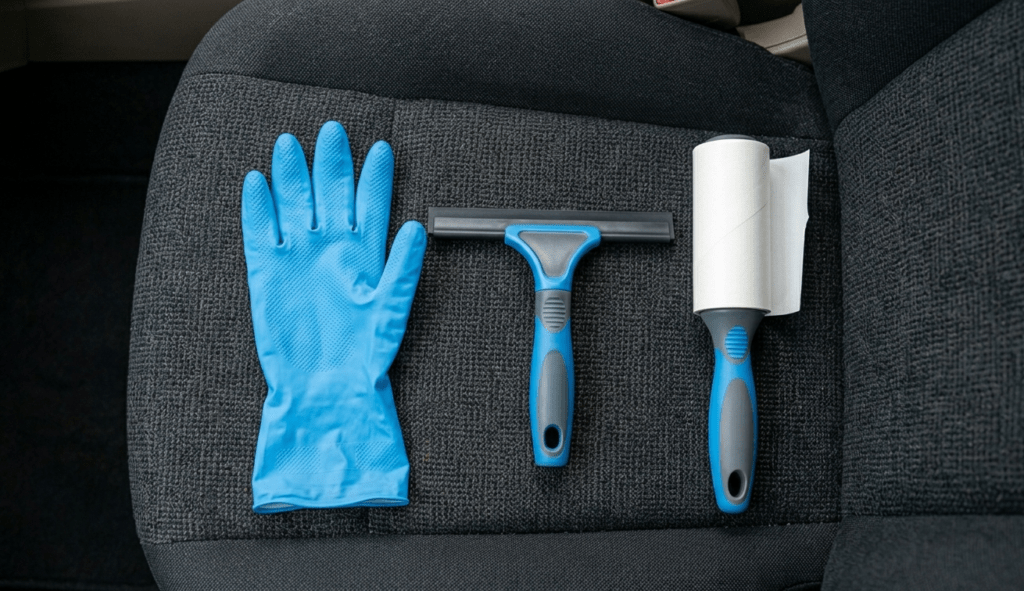
If you don’t have rubber tools, you can use common household items to create the static charge needed to lift fur.
Balloons: Rub an inflated balloon against the seat. The static electricity will draw the hair up toward the balloon like a magnet.
Dryer Sheets: Scented dryer sheets are great because they not only pick up loose hair but also leave the car smelling fresh.
Internal Link: Keeping your car clean is part of overall pet hygiene. If your car smells like “dog breath” even when the dog isn’t there, you might want to look into natural ways to freshen dog’s breath to prevent the scent from sticking to your upholstery.
Short, coarse hairs (like those from a Beagle or Lab) can get woven into the fibers of your carpet. For these, you need a more aggressive tool.
Pumice Stones: A “Fur-Zoff” or a standard pumice stone can be dragged lightly over the carpet to snag and pull out the deepest hairs.
Behavioral Connection: If your dog seems anxious or starts acting weird after being outside and entering the car, they may associate the car with a stressful event, like a trip to the vet, rather than just the mess they leave behind.
To make hair removal 50% easier, mix one part liquid fabric softener with three parts water in a spray bottle. Lightly mist the upholstery before you start. The softener breaks the static bond between the hair and the fabric, allowing your rubber tools or squeegee to slide the hair right off the surface without much effort.
No! Never use a pumice stone or abrasive tools on leather. Use a damp microfiber cloth for leather. Pumice stones and squeegees are strictly for fabric upholstery and carpets.
Use a high-quality seat cover or a “hammock” style protector. Additionally, brushing your dog thoroughly before the car ride can reduce the amount of loose fur that ends up on the seats.
Yes, but it is often inefficient for large areas. Duct tape works well for small spots, but for a whole car, rubber tools are much faster and produce less waste.
It works best on long hair (like Golden Retrievers). Short, stiff hairs may require the pumice stone or the fabric softener spray hack to fully dislodge them.
Removing dog hair without a vacuum isn’t just possible—it’s often more effective. By using friction and static electricity, you can reach the hairs that even the most powerful vacuums leave behind. A clean car makes for a much more comfortable journey for both you and your pet. For more tips on maintaining a clean home with pets, you can check out the American Cleaning Institute’s pet cleaning guide.