If your dog licking air after eating has you worried, read our guide on why this behavior happens and when it’s time to see a vet.
If your dog starts flicking their tongue at thin air immediately after a meal, it’s more than just a quirky habit. While many owners dismiss this as a way of “cleaning their chops,” frequent air licking is often a physical response to digestive discomfort or a neurological trigger. In the veterinary world, this is sometimes the first sign of ELS (Excessive Licking of Surfaces).
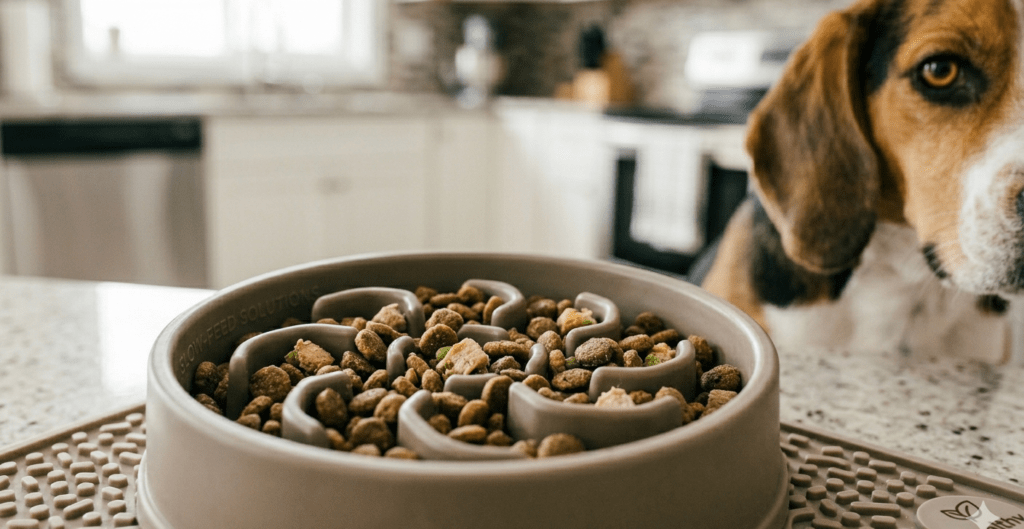
I once worked with a Beagle named Cooper who would lick the air for ten minutes straight after every dinner. His owners thought he just loved the taste of his food, but Cooper was actually suffering from LPR (Laryngopharyngeal Reflux)—a condition where stomach acid travels back up into the throat. Switching Cooper to a slow-feeder bowl and managing his portions stopped the behavior almost instantly.
The most common trigger for a dog licking air after eating is gastric motility issues. When the stomach produces excess acid to break down a heavy or fast-eaten meal, the acid can irritate the esophagus, causing a “burning” sensation.
The Connection: If this behavior escalates and your dog starts licking the carpet or tiles to soothe their throat, consult our guide on dog licking floor obsessively.
Expert Tip: Pay attention to “gulping” sounds. This indicates the dog is trying to swallow excess saliva caused by nausea.
Sometimes, microscopic food particles get stuck in the roof of the mouth (palate) or between the teeth, creating a tingling, irritating sensation known as paresthesia.
This “creepy-crawly” feeling is very similar to the neurological discomfort a dog acts weird after flea treatment might experience.
Check the Mouth: If your dog seems frantic, they might feel a sharp sensation as if something is poking them. Always check their gums for stuck debris or kibble shards.
If your dog licks the air while appearing “spaced out” or unresponsive to your voice, they may be experiencing a focal seizure (sometimes called “fly-biting” or “air-snapping”).
Canine Epilepsy: Repetitive, involuntary motions after a meal can sometimes be triggered by the metabolic spike during digestion.
What to do: Record a video of the episode. This helps your vet distinguish between a behavioral habit and a neurological disorder.
To determine if your dog’s air licking is behavioral (habit) or medical (seizure/reflux), try the Distraction Test. When they start licking, calmly call their name or offer a high-value toy.
If they stop immediately: It is likely a behavioral habit or a response to mild reflux.
If they are unresponsive or “locked in”: This is a red flag for a focal seizure or intense neurological distress. In this case, do not startle them—simply record the behavior and show it to your veterinarian for a proper diagnosis.
Wet food is often richer and higher in fat, which can trigger Acid Reflux faster than dry kibble. Additionally, wet food leaves more residue in the mouth and throat, which may cause the dog to lick the air to clear the “sticky” sensation.
Yes. Nausea causes hypersalivation. Dogs lick the air or “gulp” to manage the extra saliva in their mouths before they actually vomit.
In many cases, yes. By preventing the dog from “inhaling” their food, they swallow less air (aerophagia), which reduces bloating and the gastric pressure that causes reflux.
If the licking is accompanied by vomiting, diarrhea, a bloated abdomen, or if the dog becomes unresponsive during the licking episode, seek veterinary care immediately.
Watching your dog licking the air after eating is often a subtle signal that their digestive system needs support. Whether it’s a simple fix like using a slow-feeder to prevent aerophagia or managing a more complex case of acid reflux, being a proactive pet owner is key. Most episodes are harmless, but if the behavior is frequent or your dog seems distressed, always prioritize a professional medical evaluation. For a deeper dive into how canine digestion works and other common ailments, you can explore the Merck Veterinary Manual’s guide on digestive disorders.