If your dog is constantly at your heels, whether you are going to the kitchen, the bathroom, or even outside, you are not alone. Many owners have a “velcro dog” that refuses to let them out of their sight. But why does my dog follow me everywhere?
Does your dog follow you into the bathroom, the kitchen, and even wait outside the shower? While it’s often a sign of deep affection, being a “Velcro Dog” can sometimes stem from pack instinct, curiosity, or even underlying anxiety. Understanding the psychology behind why your dog is glued to your side is the first step in ensuring they feel secure and confident.
I once worked with a Rescue Spaniel named Barnaby. Barnaby wouldn’t let his owner move an inch without following. If she even stood up to get a glass of water, he was right there. We discovered that Barnaby’s behavior was a mix of Separation Anxiety and a lack of self-confidence. By practicing “stay” exercises and creating a rewarding independent environment, Barnaby eventually learned that he didn’t need to be his owner’s shadow to be safe.
Most dogs follow their owners because, in their minds, you are the source of everything vital—food, protection, and social interaction. This is often referred to as Allomimetic Behavior, where a dog instinctively mimics the movements of their social group to stay safe and connected.
Apartment Living: This behavior is very common in smaller living spaces. If you are currently working on the best way to potty train a puppy in an apartment, your puppy might follow you everywhere simply because they are still learning the boundaries of their new home and rely on your presence for environmental cues.
Positive Reinforcement: If your dog follows you to the kitchen and occasionally receives a scrap of food, they have been “conditioned” to stay close to you for potential rewards.
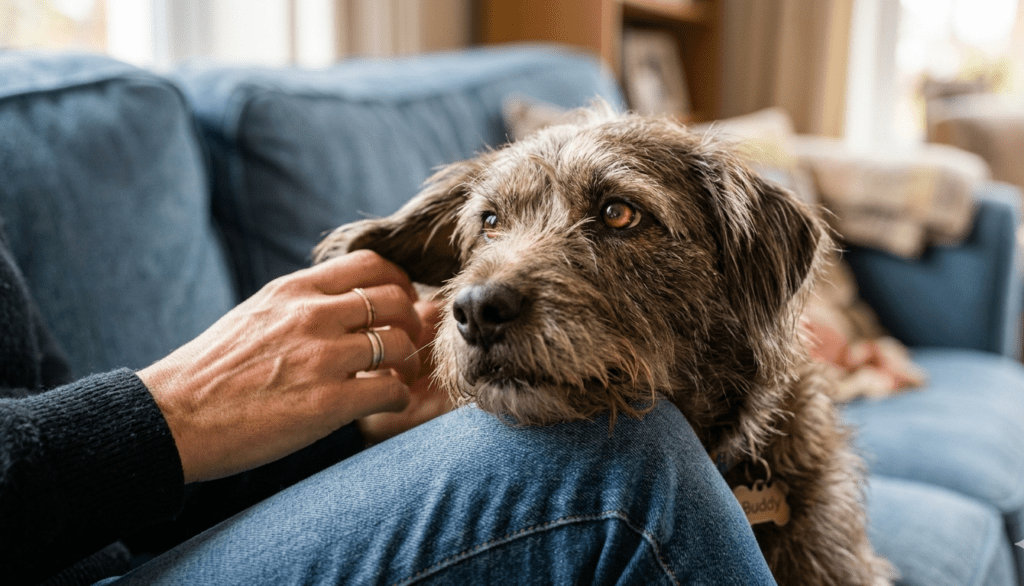
For some dogs, following you isn’t about the Human-Canine Bond—it’s about emotional regulation. If a dog feels vulnerable or lacks a sense of security, they look to their “Pack Leader” for constant reassurance.
Environmental Stress: You will notice this behavior peak during frightening events. If your dog is scared of thunder, they may follow you from room to room, panting or leaning against your legs, because they perceive you as their only safe haven from the auditory threat.
Displacement Behaviors: An anxious dog might also develop repetitive habits to cope with their stress levels. If your dog follows you to the couch and then immediately keeps licking the carpet after eating, they are likely using oral stimulation to lower their cortisol and soothe their nervous system.
Certain “working” breeds, such as Labradors, Vizslas, and Border Collies, have been genetically selected for centuries to work in close proximity to humans. For these dogs, keeping you in their line of sight is a job requirement. They aren’t just being clingy; they are fulfilling a biological drive to remain “on duty” with their handler.
If your “Velcro Dog” is making it hard for you to move around the house, teach them the “Place” command. Give them a comfortable bed or mat in the room where you spend the most time. Reward them for staying on the mat while you move around. This builds Independent Confidence and helps prevent Hyper-Attachment while still allowing them to be in the same room as you.
Usually, no. In the wild, animals are vulnerable when they are doing their business, so your dog might actually be “guarding” you while you are in a vulnerable state.
If your dog follows you but can relax when you leave the room, it’s a healthy bond. If they begin pacing, whining, or destroying furniture the second you are out of sight, it is a sign of clinical Separation Anxiety.
Actually, it’s the opposite. Following is a submissive, “affiliative” behavior. A truly dominant dog would likely stay in their spot and expect the rest of the pack to come to them.
Yes. Senior dogs with fading vision or cognitive decline (CCD) often follow their owners more closely because they rely on you as a “guide” to navigate the world safely.
While having a constant shadow can be heartwarming, it’s important to ensure your dog can also feel calm when you aren’t right there. By balancing affection with confidence-building exercises, you can enjoy your dog’s company without the stress of constant clinging. For more on the science of canine social structures, explore the Scientific American guide on dog behavior.