Can my dog eat yogurt for a sensitive stomach? Discover the expert-recommended way to serve probiotics to your dog, the benefits, and the toxic ingredients to watch out for today.
Most dogs love the creamy texture of yogurt, but as a pet parent, you’ve likely wondered: Is yogurt actually good for them? The short answer is yes—but only if you choose the right kind. While yogurt is packed with calcium and probiotics, the wrong tub can lead to severe digestive upset or even toxicity.
I remember working with a Golden Retriever named Buster who had a recurring sensitive stomach. His owner started giving him a spoonful of vanilla-flavored yogurt every morning. Instead of getting better, Buster developed gas and diarrhea. The culprit? The added sugars and artificial flavorings in the “healthy” yogurt. Once we switched him to plain, unsweetened Greek yogurt, his gut health transformed, and his coat even looked shinier.
Yogurt is famous for its live active cultures, which act as probiotics. These beneficial bacteria help balance your dog’s gut microbiome, making it an excellent treat for dogs on antibiotics or those prone to loose stools.
Nutritional Benefit: It provides high-quality protein and calcium, essential for bone density and muscle function.
Internal Link: If your dog enjoys the creamy taste but begins licking air after eating, it may be a sign that the lactose is causing mild acid reflux or nausea.
Technical Note: Look for Greek Yogurt specifically; it is strained more than regular yogurt, making it higher in protein and lower in lactose.
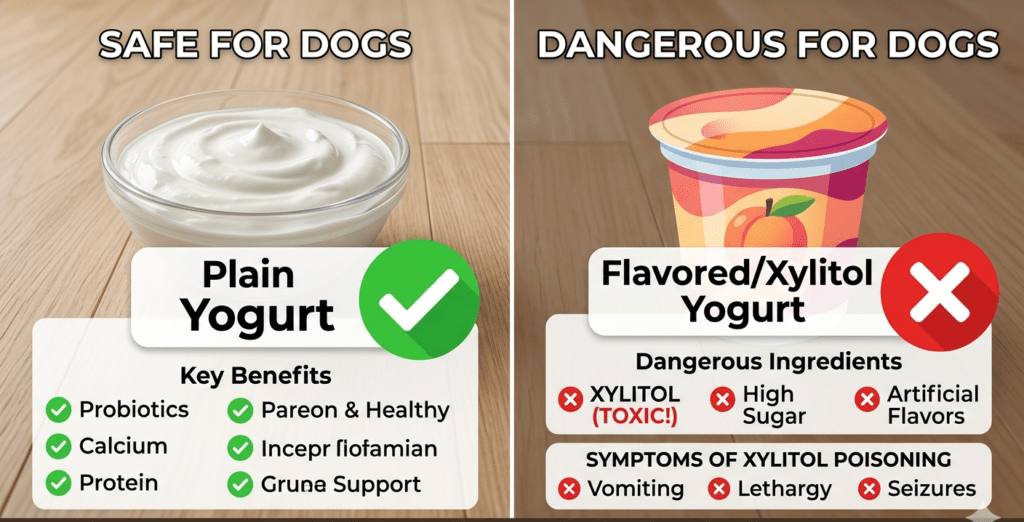
Not all yogurts are created equal. In fact, some can be life-threatening.
The Xylitol Warning: Many “low-fat” or “sugar-free” yogurts use Xylitol (often listed as Birch Sugar). Even a small amount is highly toxic to dogs and can cause liver failure. Always read the label twice.
Lactose Intolerance: While puppies have the enzyme Lactase to break down milk, many adult dogs lose this ability. Too much yogurt can lead to bloating, gas, and diarrhea.
Internal Link: If your dog experiences a sudden stomach cramp from dairy, they might pace restlessly or act weird after being outside as they try to find a comfortable position to soothe the bloating.
To keep yogurt a “healthy treat,” follow the 10% rule: treats (including yogurt) should never exceed 10% of your dog’s daily caloric intake.
Serving Idea: Freeze plain yogurt in ice cube trays for a cooling summer snack.
The “Poking” Sensation: If your dog paws at their mouth after eating thick yogurt, don’t worry—they aren’t acting like something is poking them. They are likely just trying to clear the sticky residue from the roof of their mouth.
When buying yogurt for your dog, look for the “Live and Active Cultures” seal. If the yogurt has been heat-treated after fermentation, the beneficial probiotics are killed off, leaving your dog with the calories but none of the digestive benefits. Always stick to “Plain” and “Unsweetened”—if it tastes like a dessert to you, it’s probably too sugary for them.
It is best to avoid them. Flavored yogurts are loaded with sugar and artificial ingredients. Stick to plain yogurt and add fresh, dog-safe berries yourself if you want to give them a treat.
Yes. Greek yogurt has a lower lactose content because of the extra straining process, making it easier on a dog’s digestive system while providing more protein.
For a medium-sized dog, one to two tablespoons is usually plenty. Always start with a tiny amount to check for lactose intolerance.
The probiotics in yogurt can help balance the body’s flora, which may assist in fighting yeast overgrowth, but it should not replace medical treatment from a vet.
Yogurt can be a fantastic, nutrient-dense addition to your dog’s diet when used correctly. By choosing plain, xylitol-free options, you provide your pet with a delicious boost to their immune system. For more scientific details on canine nutrition and dairy safety, check out the American Kennel Club (AKC) nutrition guidelines.