Ever wondered why is my dog licking paws and then licking me? Discover the link between paw irritation, stress, and your dog’s way of communicating.
The world of a dog revolves around scent and taste. When your dog licks their paws and immediately turns to lick you, they aren’t just sharing a “flavor.” They are engaging in a deep-rooted biological ritual that confirms your place in their social group.
I once worked with a German Shepherd named Max. Every time Max came inside from a walk, he would obsessively lick his paws and then start licking his owner’s hands. While it seemed messy to the owner, Max was actually performing Allogrooming. He was bringing “scent data” from the outside world on his paws and sharing that information with his human to maintain a “group scent.”
A dog’s paws contain Eccrine Sweat Glands that release unique pheromones. By licking their paws and then licking you, your dog is essentially applying their “ID” to you, marking you as a trusted member of their pack.
The Digestive Link: Sometimes, this behavior can be triggered by internal discomfort. If the paw licking is followed by frantic licking of you or the furniture, it could be a sign of nausea similar to when a dog is licking air after eating, often caused by acid reflux or gastric upset.
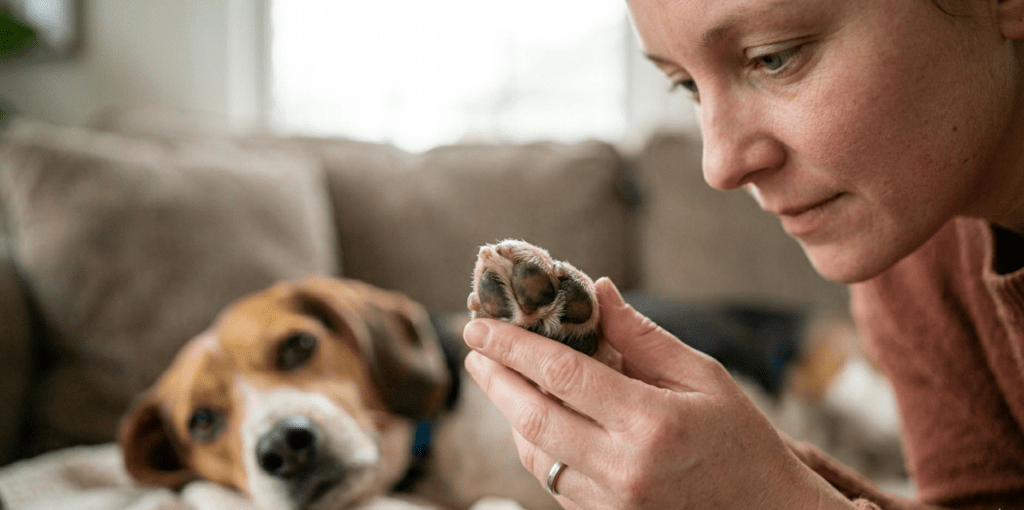
In the wild, wolves groom each other to keep the pack clean and to bond. This mutual grooming, or Affiliative Behavior, helps lower cortisol levels (stress) in both the dog and the owner. When your dog licks you after cleaning themselves, they are including you in their self-care routine.
Outdoor Triggers: If this behavior starts suddenly after a walk, it might not be social—it might be physical. Your dog may be trying to soothe an irritation or allergy they picked up, which is a common reason why a dog acts weird after being outside. Always check for grass seeds or burrs between the toes.
Canine saliva contains enzymes that act as a mild antibacterial agent. If your dog feels a “creepy-crawly” sensation on their skin, they will lick the area to soothe it.
The Sensation Check: If the licking seems frantic or obsessive, your dog might be experiencing Paresthesia—a tingling sensation that makes them feel as if something is poking them.
To understand your dog’s intent, notice the timing. If they only lick you when you are sweaty, they are likely after the salts on your skin. However, if they lick their paws first and then you, it is a Self-Soothing mechanism. Check their paw pads; if the skin is red or the hair is stained brown (saliva staining), they may have Pododermatitis (inflammation of the paw skin) and need a vet’s attention.
While it is a sign of affection, paws can carry outdoor bacteria and parasites. It is best to allow them to lick your hands rather than your face, and ensure you wash your hands afterward to stay safe.
This is a natural occurrence caused by Proteus or Pseudomonas bacteria that live on dog paws. However, if the smell is overwhelming and accompanied by redness, it may indicate a yeast infection.
Yes. Repetitive licking releases Endorphins in a dog’s brain. If they are feeling anxious or stressed, they use this double-licking habit to calm themselves down and seek comfort from you.
If it’s a calm, occasional gesture, there is no need to stop it. However, if the licking becomes obsessive (causing hair loss or sores on the paws), you should distract them with a toy and consult a professional.
A dog licking their paws and then licking you is a beautiful display of “Group Identity.” It is their way of saying, “We are part of the same pack.” As long as the behavior remains a calm social interaction and not a frantic medical symptom, it is a healthy sign of a strong bond. For more insights into why dogs use their tongues to communicate, you can explore the American Kennel Club (AKC) guide on canine licking.