
Ever wonder why do dogs like car rides so much? Discover the fascinating evolutionary pack instincts and high-speed sensory science behind this quirky canine habit.
For the vast majority of canines, the mere mention of the word “ride” or the jingle of car keys triggers an immediate explosion of joy. They sprint to the door, tail wagging, ready to leap into the back seat. While it is easy to dismiss this as a simple desire to accompany their human family, a dog’s obsession with car travel is actually rooted in a complex combination of evolutionary pack mechanics, high-intensity olfactory processing, and neurochemical rewards.
I once worked with an energetic Border Collie named Rocky who would sit staring at the garage door for hours, whining until he was taken for a drive. If his owners went for a short trip to the grocery store without him, he would pace the floor anxiously. His owners worried it was an unhealthy obsession. We discovered that Rocky wasn’t just addicted to the destination; he was addicted to the immense mental processing the drive provided. By channeling his high drive into structured vehicle safety boundaries and introducing a stable routine, his car-ride fixation transformed from an anxious demand into a calm, balanced weekend hobby.
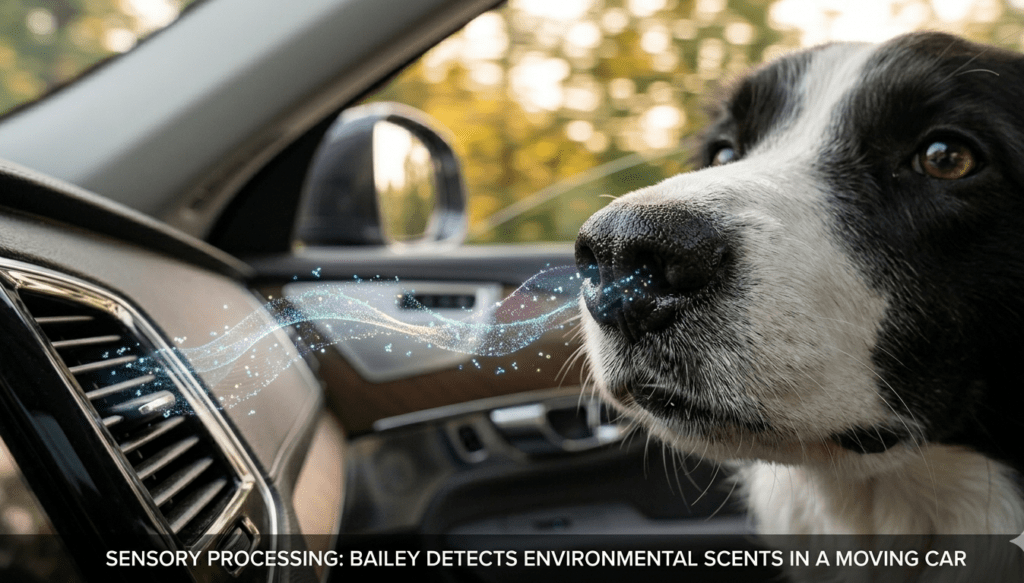
The primary reason dogs enjoy vehicle travel is the overwhelming amount of sensory data it provides to their olfactory system.
Beyond the sensory delight, the physical mechanics of riding inside a moving vehicle trigger ancestral instincts buried deep within canine DNA.
To ensure your dog’s love for car rides remains safe and controlled, you must establish clear behavioral boundaries and utilize specialized gear.
While letting your dog stick their entire head out of a rapidly moving car window looks joyful, it is highly discouraged by veterinary ophthalmologists. At high speeds, loose road debris, pebbles, dust particles, and insects can strike your dog’s eyes with bullet-like velocity, causing severe corneal ulcers, lacerations, or permanent blindness. Keep the window cracked just enough (2 to 3 inches) so they can harvest the scent currents safely without risking facial impact trauma.
If your dog is whining and drooling excessively, they are likely suffering from Motion Sickness or severe travel anxiety rather than experiencing joy. The fluid movement inside a car can disrupt a dog’s inner ear equilibrium, causing acute nausea. If they associate the car exclusively with scary trips to the vet clinic, the entire environment becomes a trigger for acute stress.
Not “high” in a toxicological sense, but they do experience a literal neurochemical rush. The massive influx of novel scent molecules hyper-stimulates the reward centers of the canine brain, triggering a heavy release of endorphins. This makes the experience highly addictive, which is why dogs recognize the specific sound of car keys or garage doors opening.
Both are safe options, but they must be crash-tested. A secure, well-ventilated plastic or aluminum travel crate tied down in the cargo area offers the highest level of protection. If you use the back seat, pair a crash-tested safety harness with a heavy-duty tether strap that clicks directly into the vehicle’s seatbelt buckle mechanism. Never attach a vehicle tether to a standard collar, as a sudden brake can cause fatal cervical spine trauma.
This behavior is known as Barrier Frustration or territorial defense. Because the dog feels trapped inside the moving vehicle while targets rapidly appear and disappear outside, their high arousal spikes. They bark because they believe their vocalizations are successfully “scaring away” the passing cars or people, inadvertently reinforcing the habit.
A dog’s love for car rides is a beautiful intersection of their wild predatory lineage and their highly sensitive sensory capabilities. By looking at a vehicle drive as an invaluable source of mental enrichment—rather than just a way to get from point A to point B—you can better cater to their evolutionary needs. By keeping their environment cool, securing them with crash-tested gear, and protecting their eyes from road debris, you can safely share the open road with your favorite pack member. For more peer-reviewed research on canine sensory capabilities and travel welfare, consult the Animal Behavior Society (ABS) research directory.