
Why is My Dog Acting Weird and Scared? (Sudden Behavioral Shifts)
Is your dog acting weird and scared all of a sudden? Discover the most common causes of canine anxiety, from environmental triggers to hidden pain, and learn how to help your pet feel safe again on PetBehaviors.
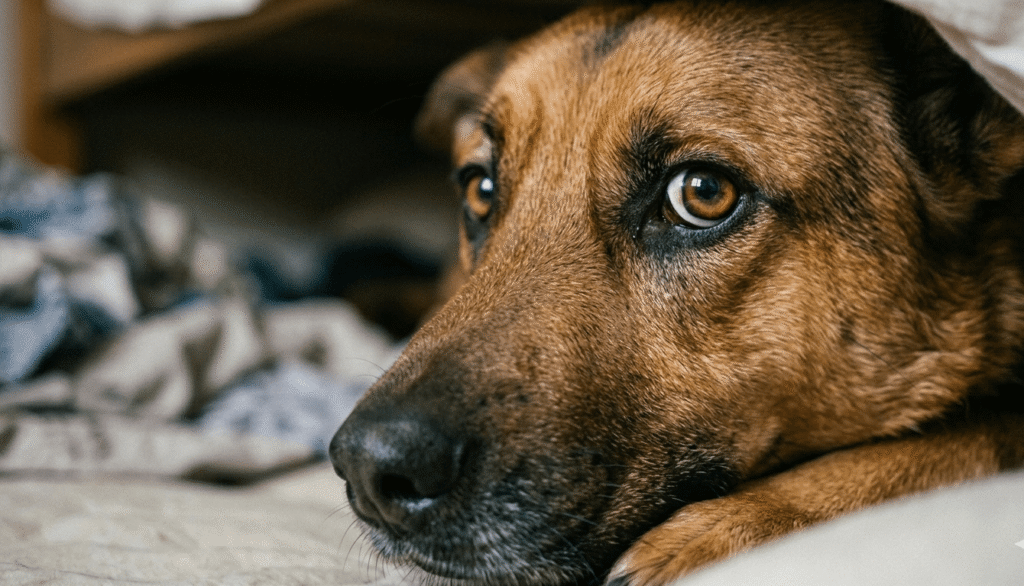
Few things are as distressing to a pet owner as watching a normally happy, confident dog suddenly transform into a shaking, terrified animal. When a dog abruptly changes their routine—such as hiding in corners, trembling, keeping their tail tucked, or refusing to eat—it is a clear signal of an Acute Behavioral Shift. Because dogs are masters at hiding vulnerabilities, this “weird” behavior is their only way to communicate that something is deeply wrong, either environmentally or physically.
I once worked with a family whose Golden Retriever, Cooper, suddenly became terrified of entering the living room. He would stand at the doorway, panting and shaking, refusing to step onto the hardwood floor. His owners thought he was experiencing a neurological issue. After a thorough investigation, we discovered that Cooper had slipped on a new floor wax a few days prior, injuring his hip. The room itself had become a Conditioned Stimulus for physical pain. Once his hip healed and we rebuilt his confidence using high-value treats, Cooper gladly reclaimed his spot on the rug.
Hidden Medical Pain and Illness
When a dog suddenly starts acting scared without an obvious external cause, the very first step must always be a comprehensive veterinary evaluation.
The Instinct to Hide Pain: In the wild, showing weakness or injury makes an animal a target. Therefore, dogs instinctively mask internal discomfort. When the pain becomes too severe to hide, it leaks out as anxious behavior, such as sudden pacing, panting, or unprovoked trembling.
Metabolic and Orthopedic Triggers: Conditions like arthritis, spinal disc tears, dental disease, or internal gastrointestinal blockages can cause severe, sudden distress. This intense physical discomfort compromises their coping mechanisms, which can cause preexisting conditions—like managing a dog with separation anxiety—to spike into massive, unmanageable panic attacks even when you are in the room.
Environmental Changes and Micro-Triggers
A dog’s sensory universe is infinitely more sensitive than ours. A trigger that seems completely invisible or minor to a human can feel like an existential threat to a canine.
Infrasound and Barometric Pressure: Dogs can hear frequencies well outside human limits and can feel drops in barometric pressure long before a storm arrives. If your dog acts terrified on a seemingly clear day, they may be reacting to distant construction, an invisible remodeling project next door, or a pressure shift.
The Multi-Pet Stress Loop: Sudden fear can also be a byproduct of a chaotic home environment. If you are currently dealing with a younger animal going through the intense “land shark” phase described in our guide on how to stop a puppy from biting, the constant, unexpected nips from a sharp-teethed pup can easily cause an older or more sensitive senior dog to become reclusive and hyper-vigilant.
Cognitive Decline in Senior Dogs
If your aging dog has started pacing endlessly at night, staring blankly at walls, or getting trapped behind doors while looking terrified, they may be experiencing Canine Cognitive Dysfunction (CCD).
Disorientation and Panic: CCD is functionally similar to Alzheimer’s disease in humans. It erodes a dog’s spatial awareness and memory. Waking up disoriented in their own home triggers a profound sense of fear and confusion, causing them to cling to their owners or hide in unusual spaces.
Rebuilding Boundaries: Managing a dog with cognitive decline or acute fear requires a highly structured environment. Re-establishing basic, low-stress routines using the gentle, positive reinforcement methods found in our in-home dog training tips can provide a comforting sense of predictability, lowering their daily baseline anxiety.
Expert Tip: The Safe Haven Sanctuary
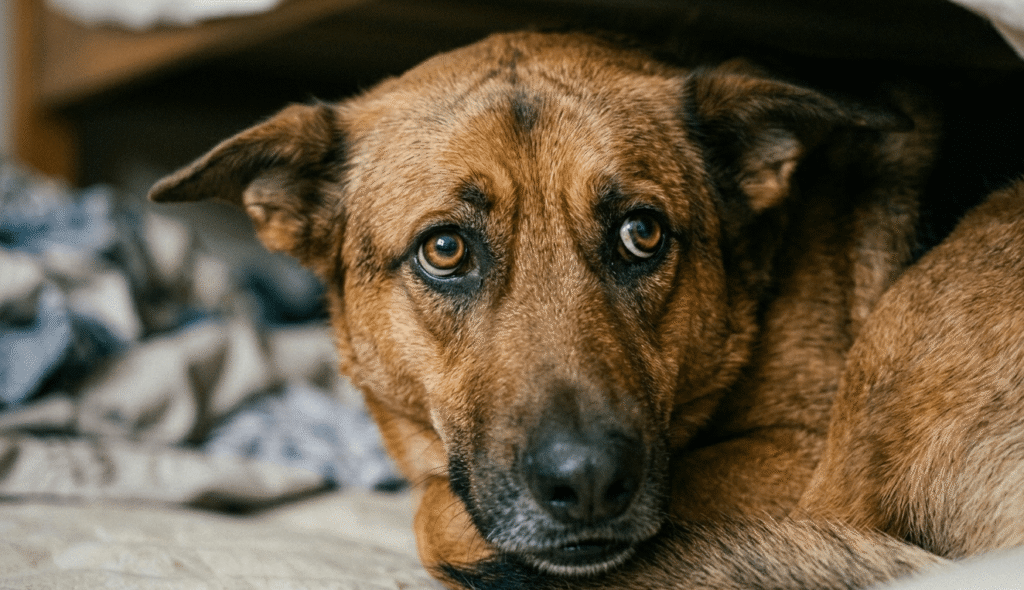
When a dog is acting scared, never force them out of their hiding spot. Dragging a terrified dog out from under a bed or from behind a couch strips them of their chosen coping mechanism and can trigger defensive aggression. Instead, place a comfortable bed, a bowl of water, and an article of your unwashed clothing near their hiding spot. Let them decompress in peace, allowing their cortisol levels to drop naturally on their own terms.
Frequently Asked Questions (FAQs)
Can a sudden fright cause a dog to act weird for several days?
Yes. This is known as Trigger Stacking. If a dog experiences a severe scare (like an unexpected firework explosion or a loud crash), their nervous system is flooded with adrenaline and cortisol. It can take up to 72 hours for these stress hormones to fully leave their system, during which the dog will remain hyper-reactive and easily frightened by minor sounds.
Why is my dog suddenly terrified of a specific room or object?
This is usually due to single-event learning or negative association. If an object fell over and made a loud noise while your dog was near it, or if they experienced a sudden sharp pain (like a static shock or a muscle twitch) in a specific room, they will associate that exact location or object with danger.
Should I comfort my dog when they are shaking and scared?
Yes, you can absolutely comfort a frightened dog. An old, thoroughly debunked training myth claimed that petting a scared dog would “reinforce the fear.” Fear is an involuntary emotional state, not a voluntary operant behavior. Offering a calm, soothing voice, gentle long strokes, and a steady presence acts as a biological safety buffer, helping lower their elevated heart rate.
How do I know if my dog's fear requires emergency veterinary attention?
If the sudden fear is accompanied by physical symptoms such as pale gums, a bloated or rock-hard abdomen, persistent vomiting, a refusal to stand up, or sudden blindness, it is a medical emergency. Take your dog to an emergency veterinary hospital immediately.
Final Thoughts
When a dog suddenly starts acting scared, they are relying on you to decode their distress signals. By systematically ruling out physical pain with your veterinarian, tracking potential environmental shifts, and giving your pet a quiet, secure space to decompress, you can safely guide them back to their confident self. For more peer-reviewed clinical data on sudden behavioral shifts in canines, explore the American College of Veterinary Behaviorists (ACVB) resource database.