How to Stop a Puppy from Biting (The Bite Inhibition Guide)
Is your puppy nipping at your hands every time you play? Learn how to stop a puppy from biting when excited using professional canine redirection and bite inhibition techniques. Master these 5 simple steps on PetBehaviors.
Bringing a new puppy home is an exciting milestone, but that joy can quickly turn to frustration when your tiny companion turns into a “land shark.” It is important to realize that puppy biting is a completely normal, instinctual behavior. Puppies use their mouths to explore their environment, play, and soothe their aching gums during teething. However, teaching your puppy Bite Inhibition—the ability to control the force of their jaws—is the most critical behavioral lesson they must learn before adulthood.
I once worked with a client who brought home an energetic Australian Shepherd puppy named Jax. Jax would sprint across the room and nip relentlessly at his owners’ ankles, heels, and hands, drawing blood with his razor-sharp baby teeth. His owners tried shouting “No!” and pushing him away, which Jax mistook for a fun game of wrestling. By practicing consistent redirection and utilizing brief, calm timeouts, we taught Jax that using his teeth on human skin caused all the fun to instantly stop. Within two weeks, his nipping completely ceased.
Understanding Why Puppies Bite: The Teething and Play Matrix
Before you can modify the behavior, you must understand the biological drive behind those sharp little teeth.
Exploratory Mouthing: Puppies lack hands; their mouth is their primary tool for processing textures and interacting with social partners.
The Teething Timeline: Between 3 to 6 months of age, a puppy’s deciduous (baby) teeth fall out to make room for adult dentition. This causes significant localized discomfort, driving an intense urge to chew on anything within reach.
The Training Application: Crunchy, cold textures can provide excellent relief for inflamed gums. Instead of letting your pup chew on furniture, you can slice up healthy snacks. Reviewing protocols like can dogs eat apples allows you to safely utilize chilled, deseeded fruit slices as soothing, low-calorie teething rewards during your training sessions.
Teaching Bite Inhibition vs. Absolute Suppression
The goal of puppy training isn’t to stop them from ever closing their mouth; it is to teach them that human skin is incredibly fragile. This process is called building Bite Inhibition.
The Littermate Lesson: In the wild, when puppies play and one bites too hard, the victim lets out a sharp “Yip!” and stops playing. This teaches the biter that painful pressure leads to isolation.
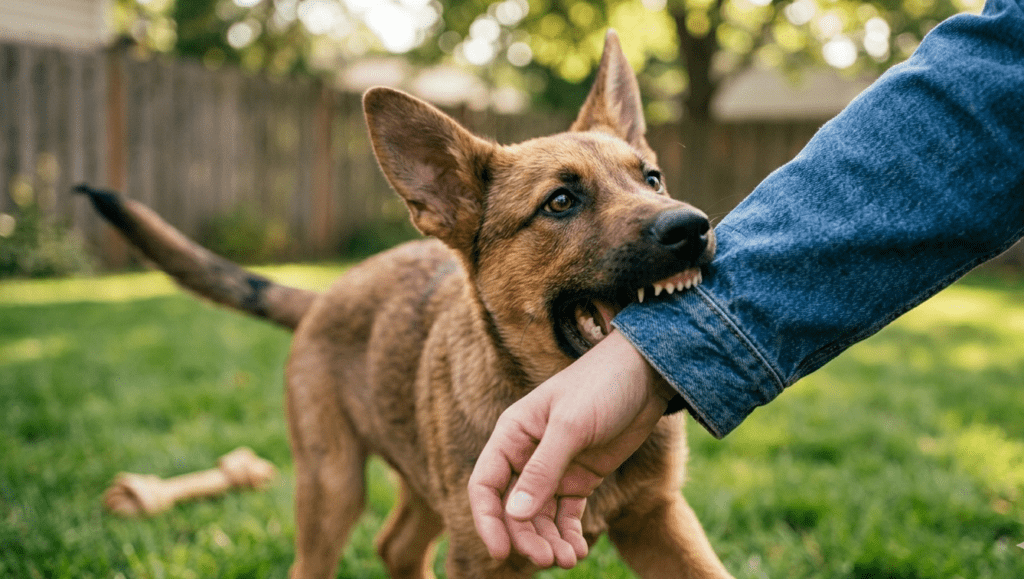
The Human Translation: When your puppy nips your hand, let out a high-pitched “Ouch!” or “Yip!” and let your hand go completely limp. Stop interacting with your puppy for 10 to 15 seconds. If they bite again, calmly stand up and walk to the other side of a baby gate. This forms a clear negative punishment loop: Biting cuts off social access.
Advanced Redirection and Environmental Enrichment
A puppy that is chronically under-stimulated or overly tired will exhibit a massive spike in frantic, defensive biting behaviors.
Target Redirection: Never engage in rough play using your bare hands. Always keep a high-quality rope toy, canvas bumper, or rubber chew nearby. The moment your puppy opens their mouth to nip you, slide the toy into their mouth.
Consistency in the Household: Every family member must react to biting the exact same way. Setting up these clear, predictable house rules mirrors the structural frameworks outlined in our guide on in-home dog training tips, ensuring your puppy doesn’t get confused by mixed signals.
Overtired Tantrums: Puppies need 18 to 20 hours of sleep per day. If a puppy has been awake for over an hour and begins biting frantically while ignoring redirection, they are likely overtired. Place them calmly in a quiet room or crate to sleep. Neglecting their sleep cycle can heighten stress, triggering developmental issues that make handling a dog with separation anxiety much more difficult later in life.
Frequently Asked Questions (FAQs)
Should I hold my puppy's muzzle shut to stop them from biting?
Never hold your puppy’s mouth closed or pin them to the ground. Physical punishments like muzzle grabbing, nose tapping, or alpha rolls escalate fear and defensive aggression. It teaches your puppy that your hands cause pain, which can lead to adult aggression or a fear of handling.
When do puppies typically stop biting?
With consistent redirection and time-outs, play-biting should drop dramatically by the time they reach 6 to 7 months of age, coinciding with the completion of their adult teeth eruption. If obsessive biting continues past adolescence, consult a professional certified behaviorist.
My puppy growls while biting my shoes. Is this early dominance?
No. Growling during play or tug-of-war is a completely normal vocal expression of excitement, not a sign of malice or alpha dominance. However, if the growling accompanies stiff body posture or guarding a specific object, it may indicate early resource guarding.
Can a lack of socialization cause increased puppy nipping?
Absolutely. Puppies that are separated from their littermates too early (before 8 weeks of age) miss out on foundational bite feedback from their mother and siblings. These puppies require extra patience and structured playdates with vaccinated, well-mannered adult dogs to learn proper boundaries.
Expert Tip: The "Yip" Backfire Warning
While letting out a high-pitched “Yip!” works beautifully for sensitive herding or companion breeds, it can occasionally backfire with high-drive working dogs (like Belgian Malinois or Terriers). To a high-drive pup, a sharp, squeaky noise sounds exactly like wounded prey, which can hyper-stimulate their predatory drive and cause them to bite harder. If your “Yip” makes your puppy more aggressive, omit the sound entirely. Instead, silently turn your back, cross your arms, and ignore them completely the moment teeth touch skin.
Final Thoughts
Stopping a puppy from biting is a masterclass in patience and flawless consistency. By understanding that mouthing is a biological communication tool, avoiding physical punishments, and consistently rewarding alternative behaviors, you guide your young dog safely into a well-mannered adulthood. For authoritative, science-backed puppy raising standards, explore the American Kennel Club (AKC) puppy behavior guidelines.