
Can dogs eat apples safely? Discover the amazing health benefits of this crunchy snack, the hidden dangers of seeds, and how to prepare apples for your pup in our expert canine nutrition guide on PetBehaviors.
The short answer is yes, dogs can absolutely eat apples. When served correctly, apples are a highly nutritious, low-calorie treat packed with essential vitamins, minerals, and dietary fibers. However, while the crunchy flesh of an apple is perfectly safe, certain parts of the fruit—specifically the core, stem, and seeds—pose serious health risks ranging from choking hazards to toxic chemical poisoning.
I once treated a young Labrador Retriever named Barnaby whose owners regularly tossed him whole apples from their backyard tree as a game. One afternoon, Barnaby swallowed an entire apple core whole, which became tightly lodged in his esophagus. He began choking, hyperventilating, and required an emergency endoscopic extraction to clear his airway. This incident highlighted why simple fruits must be prepared safely before being fed to a companion animal.
Apples are an excellent natural snack alternative to highly processed commercial dog treats, especially for senior dogs or pets tracking their caloric intake.
Vitamin Powerhouse: Apples are rich in Vitamin C (which supports immune function) and Vitamin A (which maintains healthy skin and coat).
Pectin and Dietary Fiber: The soluble fiber found in apple skin, known as pectin, regulates gastric motility. It helps firm up loose stools and stabilizes blood sugar levels, making it a great occasional treat for diabetic canines.
Despite the health benefits, you must be incredibly careful with how you chop and serve apples to prevent internal trauma or toxic ingestion.
The Cyanide Risk: Apple seeds contain a natural chemical compound called Amygdalin. When crushed or chewed, amygdalin degrades into Hydrogen Cyanide, a potent toxin that inhibits cellular respiration. While a dog would need to chew and swallow dozens of seeds to show clinical symptoms of cyanogenic glycoside poisoning, it is best to avoid the seeds entirely.
Choking and Blockages: The tough, fibrous core of an apple does not break down easily in a dog’s stomach. Swallowing a core can cause a dangerous mechanical blockage in the throat or the small intestine.
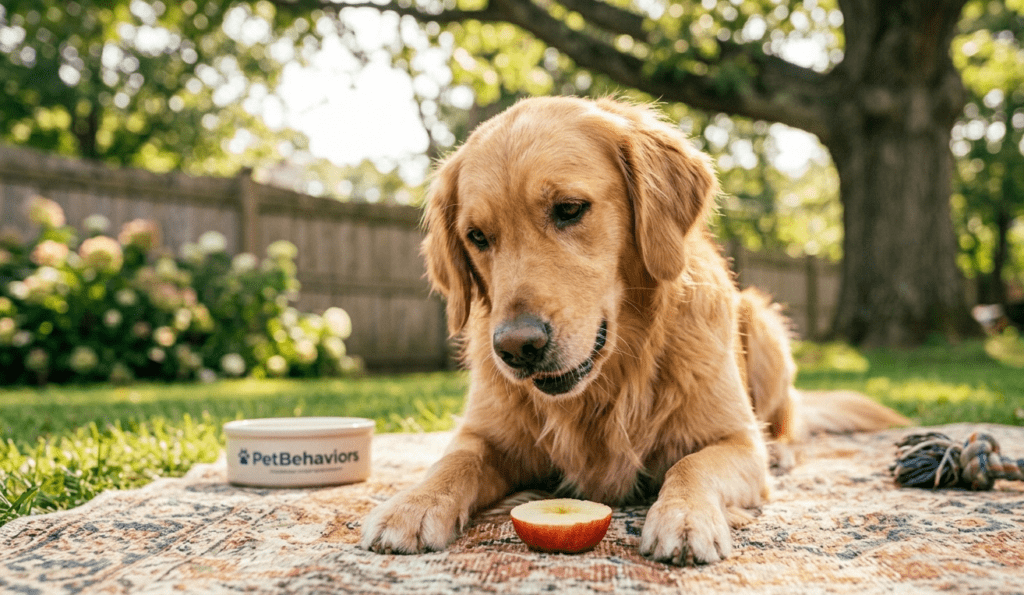
Introducing new fruits into your dog’s routine should always be paired with good boundary training to ensure they don’t develop aggressive habits around high-value snacks.
Safe Preparation: Always wash the apple thoroughly to remove pesticides. Cut the fruit into bite-sized, skin-on slices, completely removing the stem, core, and every single seed.
The Training Application: Crunchy fruit slices are fantastic high-value motivators. Instead of giving them away for free, use them during your in-home dog training tips sessions to reward complex behaviors like a steady “leave it” or “drop it.“
Multi-Pet Management: If you are preparing apple slices in a multi-species household, ensure your other animals aren’t hyper-stimulated by the sound of chopping. A dog begging for fruit downstairs can easily startle a feline upstairs, disrupting your progress if you are trying to bathe a cat without getting scratched in a low-stress environment.
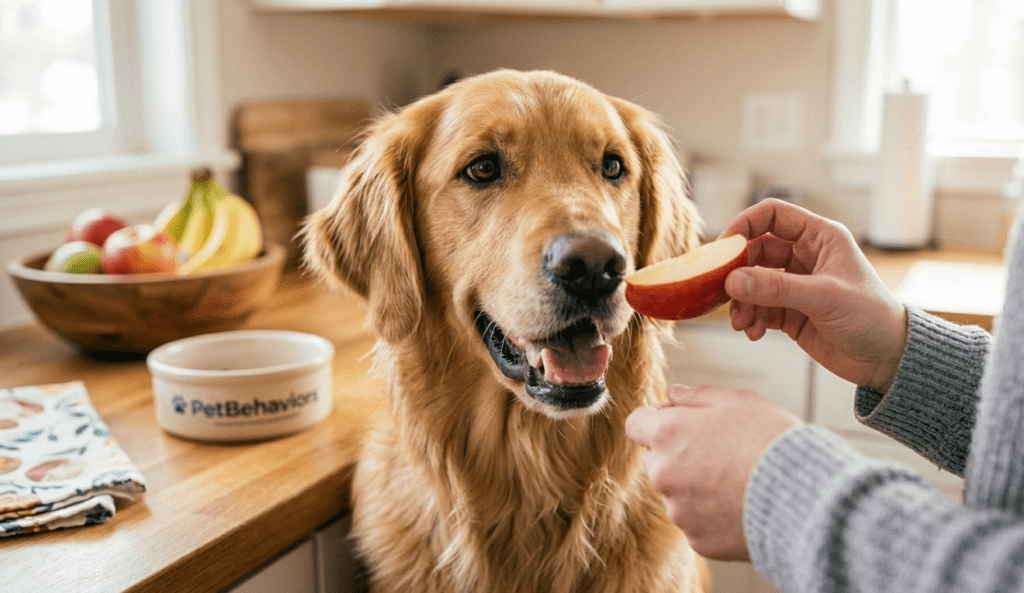
While the fibrous crunch of a raw apple slice can help mechanically scrape away loose, soft plaque from the surface of a dog’s teeth, apples cannot cure or reverse dental issues. The fruit contains natural sugars (fructose) that, if left on the teeth, can feed the anaerobic bacteria responsible for periodontal decay. To permanently refresh your pet’s mouth, you must combine healthy snacks with active mechanical cleaning protocols designed to get rid of dog bad breath safely below the gumline.
Yes, green apples are safe for dogs. However, because they are more acidic than red varieties, they taste sourer and contain more malic acid, which can cause mild stomach upset or flatulence in dogs with sensitive digestive tracts. Stick to sweet varieties like Gala or Honeycrisp if your dog has a delicate stomach.
Treats should never exceed 10% of your dog’s total daily caloric intake. For a small dog, one or two small slices are plenty. For a large breed, half a medium-sized apple per day is a safe maximum limit.
Yes, if fed in excess. The high sugar and fiber content can pull water into the large intestine, leading to loose stools or osmotic diarrhea. Introduce apples slowly—starting with a single piece—to see how your dog’s digestive system reacts.
Plain, unsweetened, organic applesauce is safe and makes a fantastic filler for frozen enrichment toys or lick mats. However, avoid commercial applesauce brands that contain added sugars, artificial preservatives, or toxic sweeteners like Xylitol.
Apples are a crisp, nutritious, and cost-effective treat that most dogs thoroughly enjoy. By taking sixty seconds to core, deseed, and slice the fruit into manageable pieces, you eliminate the risks of cyanide exposure and intestinal blockage entirely. For authoritative peer-reviewed data on safe fruits and toxic substances for companion animals, consult the ASPCA Animal Poison Control Center (APCC) toxicity index.