
Stop the struggle! Learn how to bathe a cat without getting scratched using our 6-step stress-free guide. Master feline anxiety management, claw trimming, and safe grooming techniques on PetBehaviors.
It is a well-known fact in the pet community that most cats despise water. When a feline feels trapped in a slippery, filling bathtub, their instinctual “flight-or-fight” response kicks in instantly. Without the proper preparation, a simple bath can result in severe scratches, puncture wounds, and a broken Human-Feline Bond. Fortunately, by understanding feline biomechanics and utilizing systematic desensitization, you can clean your cat safely without turning your bathroom into a battleground.
I remember helping a client with a massive Maine Coon mix named PUPPY who required regular medical baths for a skin condition. During his first bath, he panicked, scaled his owner’s back like a tree, and left deep claw marks. We completely overhauled the process by using a clipping restraint method, laying down traction mats, and utilizing a slow-pour technique. Within a few sessions, Barnaby would sit calmly in the tub, allowing his owner to wash him with zero defensive aggression.
The primary reason cats panic during a bath is a loss of traction. When their sensitive paw pads slip on slick porcelain or plastic, they feel entirely defenseless, causing them to deploy their claws to anchor themselves.
The Towel Trick: Always place a thick, damp towel or a rubber bath mat at the bottom of the sink or tub. This gives your cat immediate traction, allowing them to feel secure on their feet and dramatically decreasing their urge to climb up your arms.
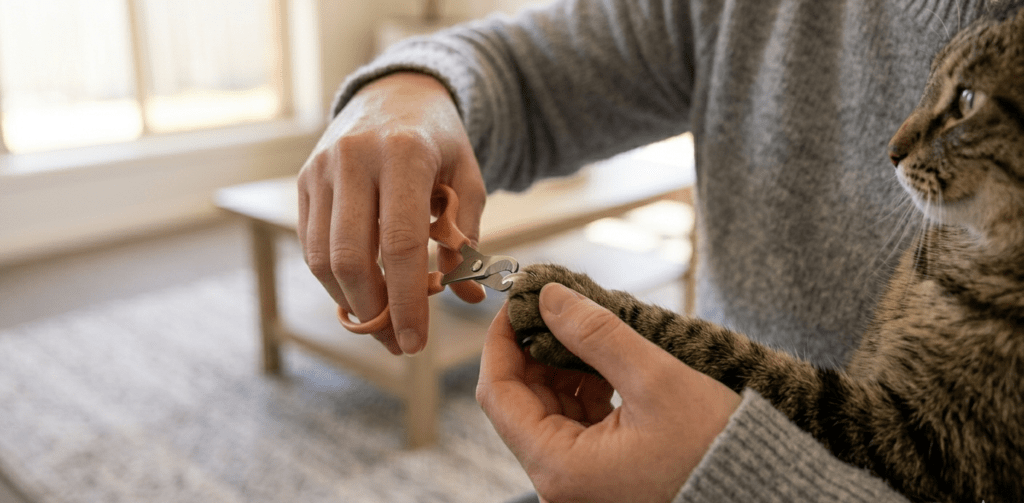
Pre-Bath Grooming: Always clip your cat’s claws using dedicated pet trimmers 24 hours before the bath. Attempting to trim their nails right before the water runs will only raise their baseline cortisol and amplify their pre-bath anxiety.
The loud, echoing roar of a running faucet or a pressurized shower head is incredibly terrifying to a cat’s sensitive auditory system.
Eliminate the Spray: Never use a moving shower wand directly on an untrained cat. Instead, pre-fill your basin or sink with 3 to 4 inches of lukewarm water before bringing the cat into the bathroom.
The Pitcher Method: Use a plastic cup or a small pitcher to gently pour water over your cat’s torso, keeping the stream away from their eyes, ears, and nose.
The Behavioral Blueprint: Training a cat to accept restraint during high-stress events requires the same level of micro-milestones you would use when following structured in-home dog training tips. You must reward tiny increments of calm behavior with high-value treats (like lickable squeeze treats) to build positive associations.
Once the bath is over, a cat’s main priority is to escape, dry off, and systematically reset their scent profile to erase the smell of the shampoo.
The Redirected Escape: The moment you wrap your cat in a dry towel, they will be in a highly reactive state. If there are other pets in the house, keep them separated. A panicked cat escaping the bathroom might lash out at a passing canine, causing a massive behavioral panic that can disrupt your progress if you are trying to handle a dog with separation anxiety or keep a peaceful multi-pet home.
The Cleanliness Loop: Once dry, your cat will lick themselves frantically or search for elevated surfaces to feel safe. If they haven’t been taught spatial boundaries, they will sprint straight to the kitchen to hide, complicating your efforts to train a cat to stay off counters when they are looking for a high, dry sanctuary.
While many old-school guides recommend grabbing a cat tightly by the scruff of their neck to immobilize them, modern veterinary behaviorists strongly advise against forced scruffing during a bath. Scruffing a panicked, adult cat deprives them of a sense of control, escalates their fear, and often triggers a violent “all-or-nothing” defensive attack. Instead, use a specialized cat bathing harness or wrap them gently in a mesh bathing bag.
Healthy cats are meticulous self-groomers and rarely need traditional baths. Unless they get into something toxic, sticky, or are suffering from a dermatological medical condition (like ringworm or flea allergies), a bath is only necessary a few times a year.
Avoid loud blow dryers at all costs. Instead, use multiple warm, dry towels to press and lift the moisture out of their fur (the “burrito” technique). Place them in a warm, draft-free room with a space heater or a sunny window to let them air-dry naturally.
No. Human baby shampoo is formulated for human skin pH (around 5.5). A cat’s skin is far more alkaline (around 7.5). Using human shampoo strips away their natural sebum oils, creating severe dryness, dandruff, and an intense itch that can damage their skin health.
The stress of a bath can cause dynamic salivation, which can amplify existing oral issues. If you notice a pungent, lingering smell from their mouth post-bath, check our guide on how to get rid of dog bad breath, as the core principles of veterinary halitosis and periodontal tartar buildup apply directly to felines as well.
Bathing a cat safely is entirely a matter of friction, pace, and reducing auditory triggers. By providing a non-slip surface, avoiding pressurized sprayers, and utilizing high-value liquid rewards, you can keep your cat calm and protect your skin from defensive scratches. For more peer-reviewed protocols on low-stress feline handling, consult the American Association of Feline Practitioners (AAFP) cat-friendly handling guidelines.