
Tired of your cat jumping on the kitchen table? Discover how to train a cat to stay off counters using 5 safe, expert-backed methods and positive reinforcement from PetBehaviors.
Few habits are as frustrating to a pet parent as preparing a meal, turning your back for a split second, and finding your cat sitting squarely on the kitchen counter. Known in the behaviorist community as “counter-surfing,” this habit isn’t just a hygiene issue; it can be dangerous if your cat steps on a hot stove or ingests toxic food scraps. Fortunately, you can reclaim your kitchen surfaces by understanding feline vertical instinct and using positive redirection.
I once worked with a mischievous Bengal mix named Barnaby who would launch himself onto the kitchen island whenever his owners cooked dinner. His owners tried spraying him with a water bottle, but it only made Barnaby afraid of them, not the counter. The moment they left the room, he was right back up there. By setting up a dedicated cat tree next to the kitchen and using clicker training, we taught Barnaby that the tree was much more rewarding than the counter.
Cats do not jump on counters to annoy you; they do it because their anatomy and evolutionary biology drive them toward elevated spaces.
Vertical Territory: In nature, heights offer safety from predators and an optimal vantage point to spy on prey. In a household, counters are the ultimate high-value real estate.
Environmental Rewards: Kitchen counters often have lingering food scents, crumbs, or a dripping faucet. This makes counter-surfing a self-rewarding behavior—the act of jumping up provides immediate positive reinforcement.
Punishing a cat with loud noises, shouting, or water spray bottles does not work. It damages the Human-Feline Bond and teaches the cat to only jump on the counter when you aren’t around.
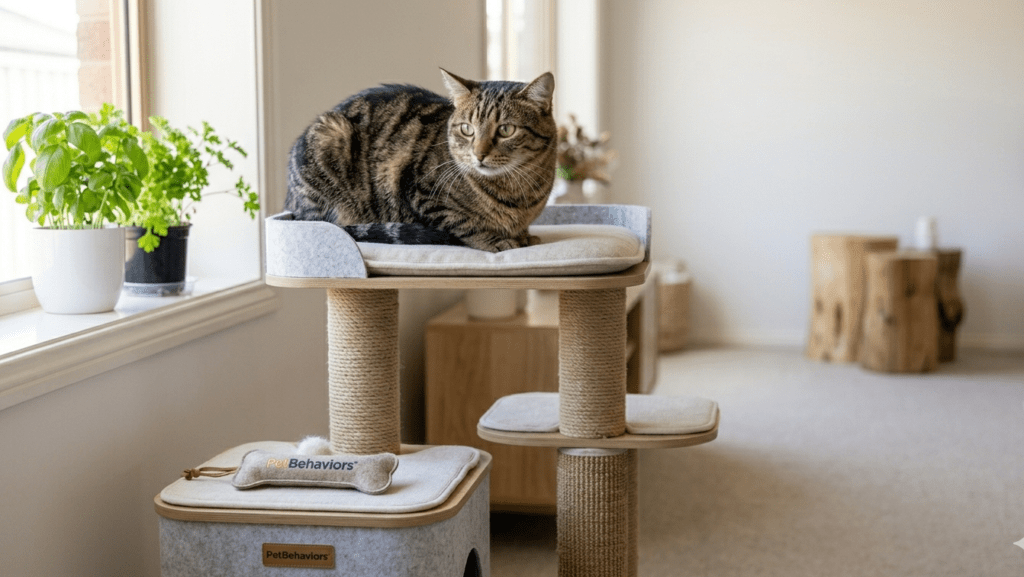
The “Click for Quiet” Strategy: Instead of punishing bad behavior, reward the good. Place a high stool or cat tree near the kitchen. Use the core concepts found in our in-home dog training tips—such as clear event markers and immediate rewards—to train your cat that sitting on their designated perch earns them premium treats, while the counter earns them nothing.
If your kitchen holds sights and sounds that hyper-stimulate a predatory feline, your training will face steeper hurdles.
The Multi-Pet Dynamic: Managing counter-surfing becomes incredibly critical if you house multiple species. If you are keeping small animals or adjusting what to feed a pet parrot, preparing fresh bird chop or chopping meat on the counter will send your cat’s hunting drive into overdrive.
The Midnight Surfer: If your cat isn’t getting enough mental stimulation from their environment during the day, they will look for adventure on your counters when the house goes dark. This midnight exploration often goes hand-in-hand with instances where a cat meows at night out of pure, unspent crepuscular energy.
While you should never punish your cat, you can let the counter punish them passively. Line the edge of your counters with aluminum foil or sheets of placemats lined with double-sided sticky tape. Cats absolutely despise the crinkly sound of foil and the sticky texture of tape on their sensitive paw pads. Because the counter itself becomes unpleasant to step on, the cat learns to avoid it completely, even when you aren’t in the kitchen.
No. Horizontal space does not satisfy a cat’s biological drive for height. To stop them from climbing your counters, you must provide alternative vertical spaces, such as floating wall shelves, window perches, or tall scratching posts.
Cats prefer running water because, instinctually, still water can harbor bacteria. Invest in a circulating feline water fountain and place it away from their food bowl. This provides them with a safe, running source of water at ground level.
Citrus, eucalyptus, and lavender sprays can act as natural deterrents because cats have highly sensitive noses. However, ensure the spray is completely pet-safe and organic, as concentrated essential oils can be toxic to felines if licked off their paws.
If you are consistent with keeping the counters completely clear of food and providing rewarding alternatives, you can see a major behavioral shift within two to three weeks.
Keeping your cat off the counter isn’t about dominance; it’s about providing superior, safe alternatives that satisfy their wild instincts. By combining environmental management, passive deterrents, and positive perching rewards, you can create a clean kitchen environment that respects your cat’s natural drives. For more advanced protocols on feline environmental enrichment, consult the International Association of Animal Behavior Consultants (IAABC) feline archive.