Want your bird to live a long, healthy life? Learn what to feed a pet parrot for a long life, from essential pellets to safe fruits, and avoid toxic foods with PetBehaviors.
When it comes to feeding a pet parrot, there is a widespread misconception that a simple bowl of sunflower seeds is enough to keep them healthy. In reality, a seed-only diet is a death sentence for most hookbills, leading to malnutrition, obesity, and systemic organ failure. To ensure your feathered companion lives a long, vibrant life, their daily intake must mirror the nutrient-dense diversity they would find in the wild.
I once worked with an Amazon parrot named Barnaby who was surrendered to a rescue center because his feathers were dull, brittle, and falling out. His previous owner had fed him nothing but cheap commercial seed mixes for five years. Barnaby was suffering from severe Hypovitaminosis A. By slowly transitioning him to a high-quality extruded pellet diet and fresh organic vegetables, his energy soared, and his brilliant green plumage completely regrew within two molt cycles.
Modern avian veterinarians universally agree that high-quality, formulated pellets should make up the vast majority of a companion parrot’s daily diet.
Nutritional Balance: Pellets are scientifically engineered to provide a precise balance of vitamins, minerals, and amino acids. Unlike seed mixes, a parrot cannot selectively pick out their favorite pieces, ensuring they receive complete nutrition in every bite.
The Ideal Ratio: For most parrot species (like African Greys, Amazons, and Cockatiels), pellets should constitute roughly 60% to 70% of their total daily caloric intake.
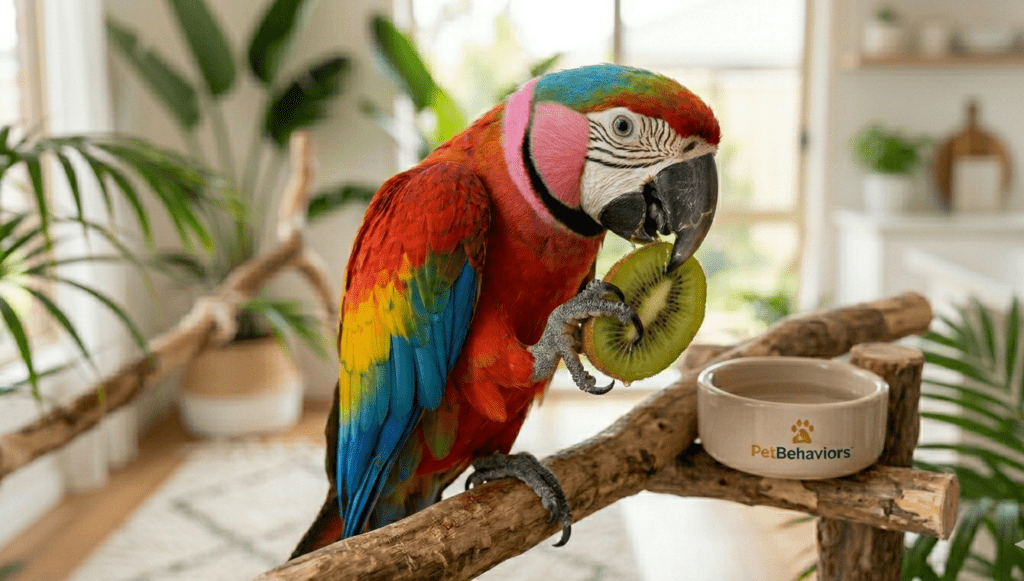
The remaining 30% to 40% of your parrot’s diet should consist of fresh, whole foods—often referred to by bird enthusiasts as “Chop.”
Vegetables over Fruits: Prioritize dark, leafy greens and orange vegetables like sweet potatoes, carrots, kale, and broccoli, which are rich in beta-carotene. Fruits (like apples, berries, and melons) should be given sparingly due to their high sugar content.
Cross-Species Nutritional Logic: Just as you must monitor the biological urges of mammals—such as understanding why a dog is eating grass due to a need for natural roughage—you must look at a parrot’s fresh food as essential biological enrichment rather than just an optional snack.
Parrots have incredibly fast metabolisms and highly sensitive digestive systems. Several common human foods can be fatal if ingested by a bird.
The Absolute No-List: Never feed your parrot avocado (contains persin, which causes cardiac distress), chocolate (contains harmful theobromine), caffeine, alcohol, or fruit pits/apple seeds (which contain trace amounts of cyanide).
Environmental Safety: Keeping a exotic pet safe requires absolute control over their environment. This is just as true when choosing the best safe bedding for small pets to avoid toxic respiratory fumes, or when setting up boundaries using in-home dog training tips to keep your larger predatory pets safely separated from your avian areas.
Sunflower seeds are incredibly high in fat and low in vital nutrients. Think of them as the “potato chips” of the bird world. While fine as an occasional training reward, a diet based primarily on sunflower seeds leads directly to Hepatic Lipidosis (Fatty Liver Disease).
No. If your parrot is eating a balanced pellet diet, adding vitamins to their water can actually cause a toxic overdose (hypervitaminosis). Furthermore, vitamins change the taste of the water, which can cause your bird to stop drinking and become dehydrated.
Yes! Cooked brown rice, quinoa, whole-wheat pasta, and oatmeal are excellent source materials for complex carbohydrates. Just ensure they are cooked completely plain without any added salt, butter, or oil.
Fresh water bowls should be washed daily with hot, soapy water because birds love to “dunk” their food, creating a breeding ground for dangerous bacteria. Fresh vegetable bowls should be removed from the cage after 2 to 3 hours to prevent spoilage and fruit flies.
Feeding a pet parrot correctly is a daily commitment to chopping fresh produce and sourcing premium pellets. By moving away from the outdated seed-bowl method and embracing a diverse, nutrient-rich diet, you ensure your companion retains their brilliant feather color, sharp cognitive functions, and enjoys a long lifespan. For more peer-reviewed dietary studies on avian medicine, explore the Association of Avian Veterinarians (AAV) nutrition guidelines.