
Is your cat keeping you awake? Discover Why Do Cats Meow at Night, from natural instincts to health concerns, and learn expert, effective solutions to stop night-crying and improve your sleep on PetBehaviors.
It is a frustrating scenario for many cat owners: you’ve just settled into bed for a peaceful night’s sleep, only to be awoken by loud, persistent yowling from the hallway. Nighttime vocalization in felines is a incredibly common behavioral issue. While it might feel like an intentional attempt to disrupt your sleep, cats meow at night due to deep-seated predatory instincts, territorial habits, or underlying medical shifts.
I once worked with a client whose Siamese cat, Barnaby, would pace down the living room rug and yowl at 3:00 AM every single night. His owners were completely sleep-deprived and thought he was in physical pain. After analyzing his routine, we discovered Barnaby was experiencing simple boredom combined with an inverted sleep schedule. By introducing a intense evening play session and a timed feeder, Barnaby’s nighttime concerts stopped entirely.
Many people believe cats are strictly nocturnal, but they are actually crepuscular. This means their natural hunting instincts peak during the twilight hours of dawn and dusk.
The Pent-Up Energy Loop: If a house cat spends the entire day sleeping while you are at work, they wake up at night with an excess of physical energy. With no prey to hunt, they use vocal solicitation (meowing) to demand attention or play from their sleeping owners.
Structural Management: Correcting this behavioral pattern requires a strict, predictable routine. Just like managing house rules with in-home dog training tips, you must learn to ignore the unwanted behavior (meowing) rather than rewarding your cat with attention, treats, or scolding at 3:00 AM.
Cats are highly territorial animals that are incredibly sensitive to changes within their living space. A sudden sound, a stray animal outside the window, or a new addition to the family can trigger nocturnal anxiety.
The Scent of Preying Triggers: If you have recently expanded your household into other pet categories, it can alter the nighttime dynamic. For example, if you are learning what to feed a pet parrot or keeping small rodents on the best safe bedding for small pets, your cat’s wild predatory drive will be hyper-stimulated. Hearing a bird rustle or a hamster burrowing in the dark can cause your cat to vocalize out of pure frustration because they cannot reach the target.
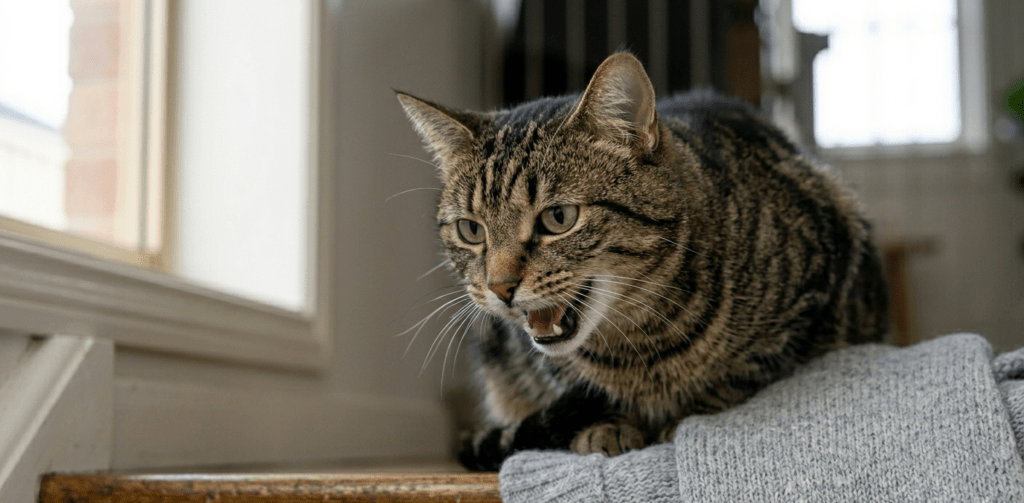
If your cat suddenly starts meowing at night later in life, the cause is often medical rather than behavioral.
Feline Cognitive Dysfunction (FCD): Similar to dementia in humans, senior cats can become disoriented in the dark. They may wake up, forget where they are, and yowl out of panic and confusion.
Hyperthyroidism: An overactive thyroid gland floods a cat’s system with excess hormones, causing elevated blood pressure, constant hunger, and hyper-activity that frequently manifests as loud nighttime vocalizations.
To reset your cat’s internal clock, implement the “Play, Feed, Sleep” routine right before your own bedtime. Engage your cat in a high-intensity, 15-minute play session using a wand toy until they are physically panting. Immediately afterward, feed them their largest meal of the day. In nature, a cat hunts, eats, grooms, and then goes to sleep to digest. Replicating this natural bio-rhythm guarantees a quiet night.
No. This is the biggest mistake cat owners make. Even if you get up to yell at them, you are validating their behavior by giving them attention. Any response from you reinforces the habit, ensuring they will meow louder the next night.
Yes! If your senior cat is suffering from Cognitive Dysfunction or fading eyesight, a dark house can be terrifying. Leaving a few dim nightlights near their food, water, and litter box helps them navigate safely without panicking.
If your cat is intact, nighttime yowling is a biological mating call. Females in heat will yowl relentlessly to attract males, and unneutered males will yowl out of frustration. Sterilizing your pet will completely eliminate hormone-driven vocalizations.
Absolutely. Cats are meticulously clean animals. If their litter box is full or dirty, they will often pace around it and vocalize loudly to alert you that their bathroom facilities are unacceptable.
Curbing nighttime meowing requires identifying whether your cat is acting out of boredom, predatory frustration, or age-related disorientation. By adjusting their feeding schedules, offering evening enrichment, and consulting your vet for hormone checks, you can restore peace to your home. For authoritative insights into feline cognitive health, explore the American Association of Feline Practitioners (AAFP) senior care guidelines.