
Learn how to housebreak your pet in a small space! We break down the best way to potty train a puppy in an apartment with a step-by-step guide.
Potty training a puppy is challenging, but doing it in an apartment adds extra layers of difficulty—like long elevator rides and lack of a private yard. The key to success is consistency, a strict schedule, and positive reinforcement.
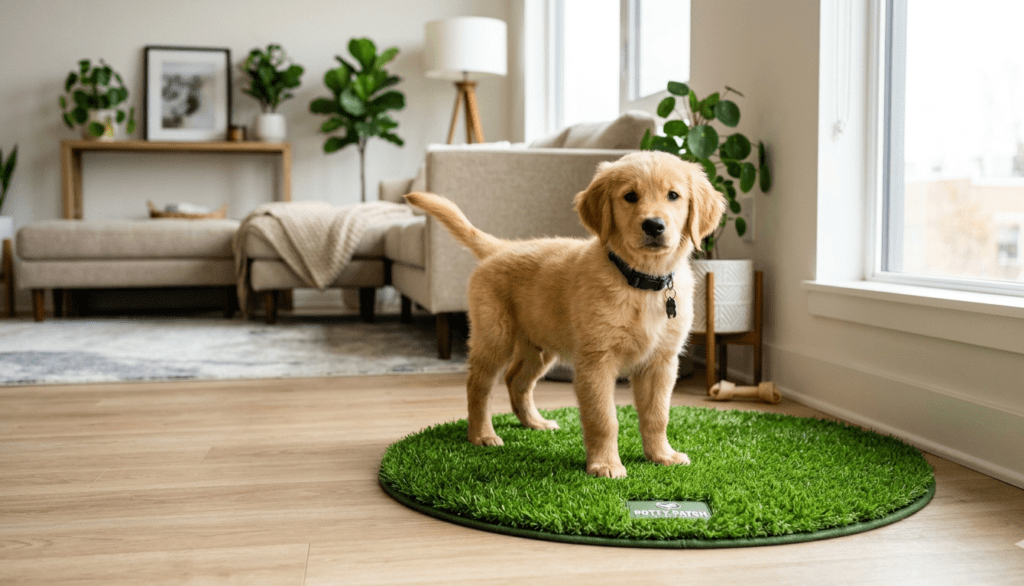
I remember helping a client with an Apartment-bound Frenchie named Leo. Leo kept having accidents because the walk to the “potty spot” was just too far for his tiny bladder. We switched him to a transition method (using grass pads on the balcony first), and within a week, he was successfully waiting for his outdoor walks.
Puppies have tiny bladders and usually need to go every 1–2 hours. In an apartment, you don’t have the luxury of opening a back door, so timing is everything.
The Golden Rule: Take them out immediately after waking up, after playtime, and 15–20 minutes after eating or drinking.
If your puppy starts licking air after eating, it might be a sign of minor indigestion or excitement, which often precedes a sudden need to go potty.
Accidents will happen, and how you react determines how fast they learn. Never punish a puppy for an accident; instead, clean it thoroughly to remove scent markers.
Rug Protection: Puppies love the soft feel of carpets. If you aren’t careful, they can develop a habit of “rug-peeing” that is hard to break.
The Post-Surgery Connection: This is similar to the challenges owners face when learning how to stop dog from peeing on rugs after being spayed. In both cases, using an enzymatic cleaner is the only way to stop them from returning to the same spot.
A crate is not a punishment; it’s a den. Dogs instinctively avoid soiling their sleeping area, which makes the crate a powerful ally in apartment potty training.
Space Management: If the crate is too big, the puppy might pee in one corner and sleep in the other.
Observation: Watch for signs of restlessness. If your puppy starts pacing or acting weird after being outside, they might be trying to tell you that they didn’t finish their business and need to go back out immediately.
Since you can’t always see the door in an apartment, hang a bell at your dog’s eye level on the front door. Every time you go out for a potty break, tap their paw against the bell. Eventually, your puppy will “ring” the bell themselves to signal they need to go, saving your rugs from unexpected accidents.
If you live on a high floor, pads can be a lifesaver. However, be aware that some puppies confuse the texture of pads with rugs. Transitioning to a “real grass” indoor patch can help avoid this confusion.
Typically, it takes 4–6 months for a puppy to be fully house-trained. However, some breeds take longer. Consistency with your elevator/stair routine is the most important factor.
This is common! Pick up your puppy and carry them through the common areas until you reach the grass. Most puppies won’t pee while being held.
Absolutely. High-quality food leads to smaller, firmer, and more predictable stools. Avoid giving too many treats like yogurt unless you’ve confirmed can my dog eat yogurt without getting an upset stomach.
Potty training in an apartment requires more effort, but the bond you build during those frequent walks is worth it. Stay patient, use the right cleaners, and stick to your schedule. For more advanced house-training techniques, check out the Humane Society’s guide to house training.