Dealing with post-spay accidents? Discover the best way to stop dog from peeing on rugs after being spayed and regain your home’s cleanliness.
It is frustrating when a house-trained dog suddenly starts having accidents on your favorite rugs, especially after a major surgery like a spay. While it may seem like a behavioral “protest,” peeing on rugs after being spayed is usually a combination of medical recovery, hormonal changes, or surgical inflammation.
I worked with a client whose Golden Retriever, Molly, began leaking urine on the living room rug just three days after her spay. Her owners were worried she had “forgotten” her training. In reality, the surgery had caused temporary inflammation near her bladder, making it hard for her to hold it. By implementing a strict potty schedule and using enzymatic cleaners, we managed to stop the habit before it became a permanent behavioral issue.
During a spay, the reproductive organs are removed, which can lead to a drop in estrogen levels. Estrogen helps maintain the muscle tone of the urethral sphincter. Without it, some dogs experience “leakage.”
Recovery Phase: Inflammation from the procedure can also put pressure on the bladder. This makes the dog feel a sudden, urgent need to go, often leading them to choose an absorbent surface like a rug.
Potty Behavior: During this recovery, your dog might act out in other strange ways. If they seem restless or start acting weird after being outside, it could be due to the discomfort of their incision or a side effect of their pain medication.
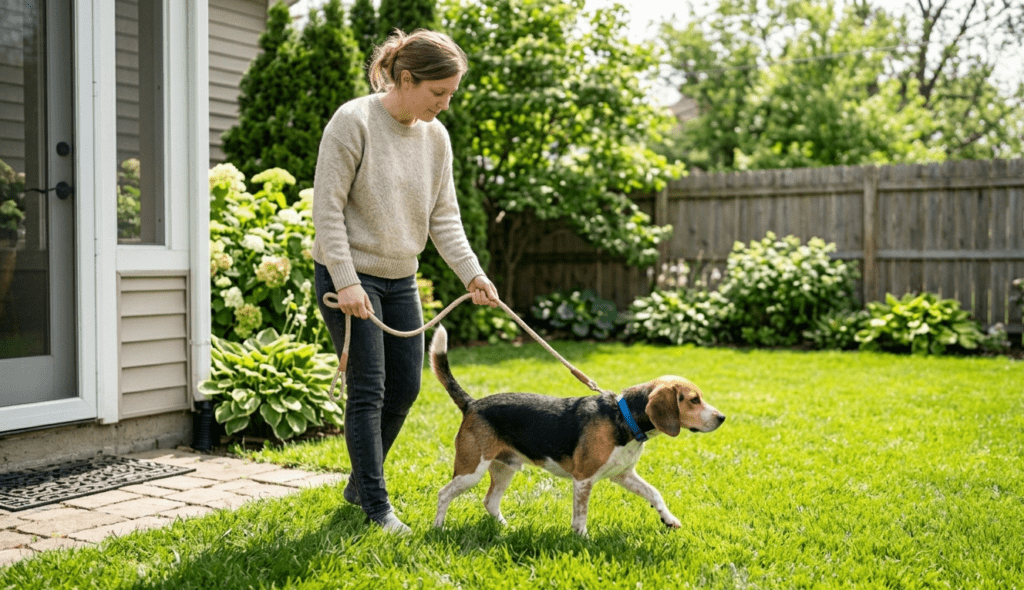
Dogs often choose rugs because they are absorbent and “feel” like grass under their paws. Once a dog pees on a rug, the scent remains (even if you can’t smell it), calling them back to the same spot.
Enzymatic Cleaners: Use a cleaner specifically designed to break down uric acid. Standard soap won’t remove the “scent marker.”
Restrict Access: Until the surgery is fully healed (usually 10–14 days), limit your dog’s access to carpeted areas. Use baby gates or keep them in a tiled room where cleanup is easy.
Cleaning Habits: If your dog is constantly sniffing or licking the floor obsessively near where they had an accident, they are likely searching for that lingering scent marker.
Post-surgery dogs need a “refresher course” in potty training. Their internal clock is often thrown off by the anesthesia and hospital stay.
Frequent Potty Breaks: Take your dog out every 2 hours, just like you would with a puppy.
The “Poking” Sensation: Watch for signs of irritation. If your dog suddenly jumps up or snaps at their hindquarters, they may be feeling a sharp pinch from their internal sutures. This can be confusing for a dog and may look like they are reacting as if something is poking them.
If the accidents happen mostly at night, consider using a crate or a small exercise pen. Dogs have a natural instinct not to soil where they sleep. By limiting their space, you encourage them to strengthen their bladder control during the recovery phase. However, if the leakage happens while they are sleeping, it is likely medical incontinence and should be discussed with your vet for possible medication.
Minor leakage or increased urgency is common during the first week due to inflammation and IV fluids given during surgery. However, if it persists beyond two weeks, it could be Spay-Induced Urinary Incontinence (USMI).
You can use specialized dog diapers (belly bands or full diapers) to protect your rugs, but make sure to change them frequently to prevent a “urine burn” or infection near the surgical site.
It doesn’t “wipe” their memory, but the hormonal shift can cause temporary anxiety or lethargy. Once the hormones settle and the pain subsides, most dogs return to their normal house-trained selves.
If the vet diagnoses USMI (hormonal incontinence), medications like Phenylpropanolamine (PPA) or Incurin can help tighten the bladder sphincter. Many dogs only need this temporarily, while others stay on a low dose long-term.
Peeing on rugs after a spay is a hurdle, but it is rarely a sign of permanent “bad behavior.” By combining patience with medical oversight and a strict cleaning routine, you can get your household back to normal. If you notice your dog is also showing signs of a UTI (straining or blood in urine), seek veterinary help immediately. For more on post-operative care, visit the AAHA (American Animal Hospital Association) surgery recovery guide.