Stop before you feed! Discover the truth about can dogs eat raw chicken bones safely and why cooked chicken bones are dangerous for dogs.
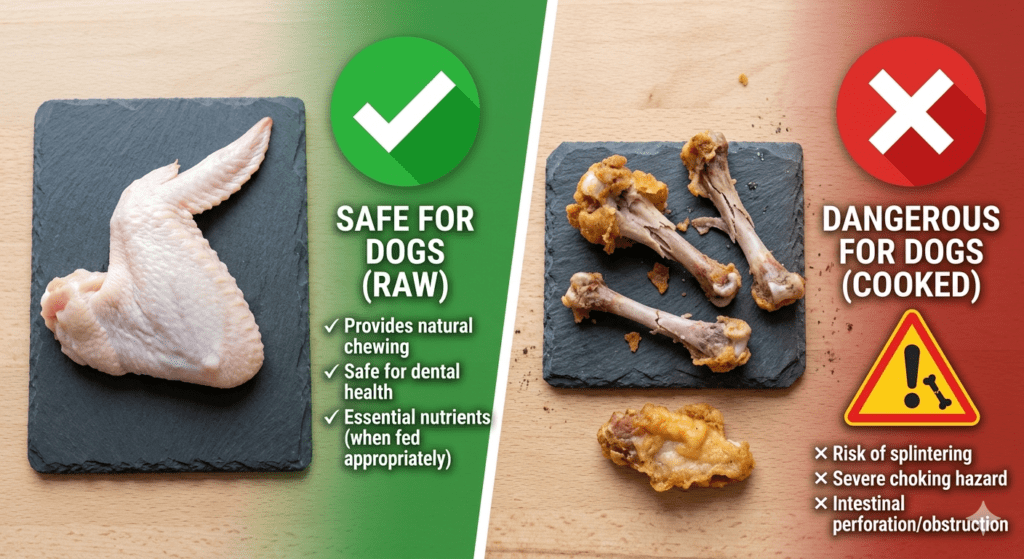
The debate over whether chicken bones are safe for dogs is one of the most common discussions among pet owners. The simple answer is: Raw chicken bones can be safe and nutritious, but cooked chicken bones can be deadly.
I once assisted with a case involving a Boxer named Duke. Duke had managed to steal a cooked chicken leg from a trash can. Because the bone had been cooked, it became brittle and sharp, eventually splintering and causing a dangerous blockage in his digestive tract that required emergency surgery. In contrast, dogs on a balanced Raw Food Diet typically have high stomach acidity that allows them to process raw, soft bones without issue.
When a bone is cooked, its molecular structure changes, making it “brittle.” This is the primary reason why paki hui (cooked) bones are so hazardous.
Raw Bones: These are flexible and contain vital moisture. When chewed, they crush rather than splinter, providing a natural source of calcium and phosphorus.
Cooked Bones: Cooking dehydrates the bone, causing it to break into glass-like shards that can puncture the esophagus or intestines.
Behavioral Observation: If your dog swallows a bone and begins pacing or acting restless, they may be in pain. This sudden discomfort often causes a dog to act weird after being outside, as they struggle to settle due to internal irritation.
Feeding raw chicken bones isn’t just about nutrition; it’s about “Nature’s Toothbrush.”
Mechanical Cleaning: The act of gnawing on a raw bone helps scrape away Calculus (Tartar) from the gumline, preventing gingivitis.
Mental Stimulation: Chewing releases endorphins in a dog’s brain, which helps lower stress and provides a constructive outlet for their natural chewing instincts.
Post-Meal Habits: If you notice your dog flicking their tongue at the air after a bone, they might have a small fragment stuck in their teeth. This is a common trigger for a dog licking air after eating.
While raw bones are safer than cooked ones, they are not 100% risk-free. You must be aware of Salmonella and potential choking hazards.
Safe Handling: Always source fresh, human-grade meat and wash your hands and your dog’s bowl thoroughly after feeding.
Size Protocol: Always match the bone size to the dog. Chicken necks are great for small breeds, while chicken quarters are better suited for large dogs to prevent them from swallowing the bone whole.
Sensitivity: If a small piece of bone irritates their throat or mouth, they may react as if something is poking them, leading to frantic pawing or licking.
If you are ever unsure whether a bone is raw or has been “lightly cooked” (which is just as dangerous), use the Hammer Test. Place the bone on a hard surface and strike it with a hammer. A safe, raw bone will crush or flatten. A dangerous, brittle bone will shatter into sharp shards. Only feed bones that pass the “crush” test.
Yes. If a dog eats too many bones without enough muscle meat, their stool can become hard, dry, and “chalky white.” Always follow a ratio of roughly 10% bone to 90% meat.
In most healthy dogs, the high acidity of the stomach will dissolve a raw wing. However, monitor them for 48 hours for signs of vomiting, lethargy, or a bloated abdomen.
Chicken necks are excellent for puppies because they are soft and help with the teething process. However, always supervise them to ensure they are chewing and not “gulping” the pieces.
Bones are considered “high-value” items. This can trigger Resource Guarding, where a dog growls to protect their prize. It is best to feed bones in a quiet, isolated area where the dog feels secure.
Raw chicken bones can be a healthy, natural addition to your dog’s routine, provided you avoid cooked leftovers at all costs. By prioritizing fresh sourcing and proper sizing, you can provide your pet with excellent dental and nutritional benefits. For more detailed safety standards on raw feeding, you can consult the AVMA (American Veterinary Medical Association) guidelines.