Ever wonder why do dogs lick themselves after a bath? Explore the 4 scientific reasons behind this post-bath behavior—from sensory overload to stress relief—in our expert guide.
For many pet parents, bath time is a refreshing routine that leaves their furry companion smelling like lavender or oatmeal. However, the moment your dog steps out of the tub and completes their dramatic full-body shake, they often begin compulsively licking their fur. While it looks like they are just drying off, post-bath licking is actually a complex sensory reset driven by instinct and canine communication.
I once worked with a Standard Poodle named Oliver who had severe post-bath anxiety. The moment he was towel-dried, he would sit in his bed and frantically lick his damp legs until his skin turned pink. His owner thought he was just being clean, but Oliver was experiencing sensory overload from the heavily perfumed shampoo. Switching to an unscented, hypoallergenic formula and introducing calming reinforcement completely stopped his frantic post-bath grooming.
The primary reason a dog licks themselves after a bath is to strip away the artificial fragrance of the soap. A dog’s sense of smell is up to 40 times more powerful than ours. What smells like a pleasant perfume to you can feel like an aggressive chemical assault on their olfactory system.
Reclaiming Group Scent: Dogs use their natural body odor as a signature “ID.” By licking their damp coat, they use their saliva to replace the shampoo scent with their own pheromones, restoring their sense of identity and security within their home pack.
The Training Overlap: If this grooming behavior turns into a frantic, hyper-focused routine, it can quickly turn into a hard-to-break habit. Correcting this sensory-driven behavior requires the same consistency and redirecting techniques detailed in our comprehensive guide on in-home dog training tips.
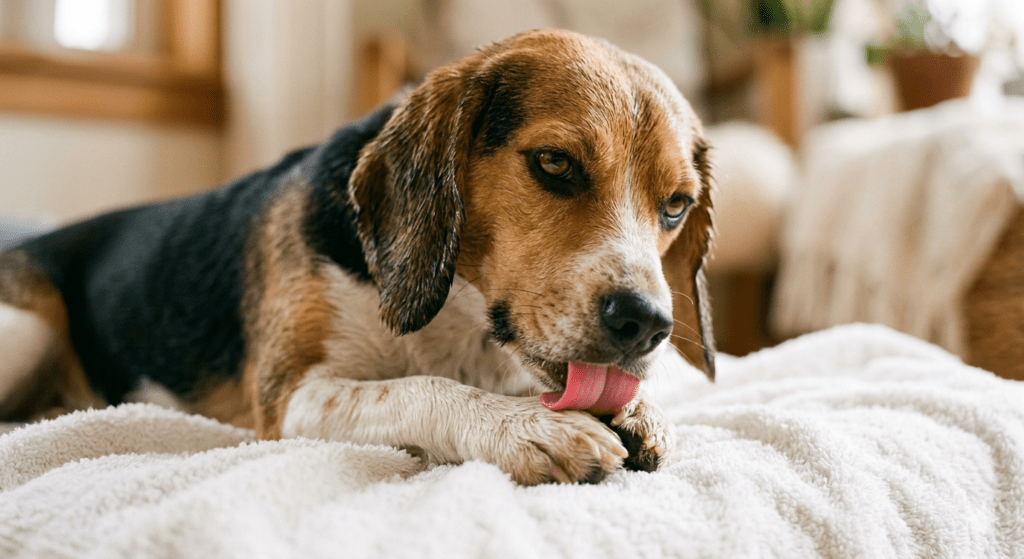
Canine saliva contains enzymes that help break down moisture, and the physical action of licking acts as a manual squeegee to help dry the undercoat. However, if the water was too warm or if the soap dried out their skin, the licking is likely a response to a sudden, prickling itch.
Sensory Overload: When a dog’s skin gets dry or irritated from a bath, the sensation can be highly unsettling. They may jump up suddenly or bite at their fur, reacting exactly as if something is poking them due to the sudden onset of post-bath itchiness or static electricity in their drying coat.
Bath time is a high-stress event for many dogs. The restraint, the loud sound of the running water, and the sensation of being trapped in a slippery tub can trigger a significant spike in cortisol (the stress hormone).
Oral Calming Mechanisms: Licking releases endorphins in a dog’s brain, which serves as a natural self-soothing mechanism to lower their heart rate after a stressful event.
Compulsive Shifts: If a dog isn’t allowed to lick their own fur to calm down, they will often shift that anxious energy toward the nearest soft surface. This is very similar to the anxiety loop where a dog keeps licking carpet after eating, using the texture of the rug to ground themselves and process their emotional stress.
To prevent post-bath skin irritation and the subsequent frantic licking, never apply concentrated dog shampoo directly to your pet’s coat. Instead, mix one part shampoo with four parts water in a plastic cup or spray bottle before applying it. Diluting the soap ensures it penetrates the undercoat evenly and rinses out completely, leaving no chemical residue behind to irritate their sensitive skin.
Yes. If a dog focuses on one specific area (like the base of the tail or the front paws) while their coat is still damp, the trapped moisture combined with constant licking can create a Acute Moist Dermatitis (hot spot), which requires veterinary treatment.
The best distraction is a high-value mental game. The moment you finish towel-drying them, hand them a frozen chew toy or a lick mat covered in dog-safe peanut butter. This satisfies their natural urge to lick while keeping them focused on a treat rather than their damp fur.
Never use human shampoo on a dog. Human skin has a pH balance of around 5.5 (acidic), while canine skin has an alkaline pH of around 7.5. Using human products strips away their acid mantle, causing severe dryness, flaking, and intense itching that will actually increase their post-bath licking.
This is called the “post-bath crazies” or FRAPs (Frenetic Random Activity Periods). Rubbing their muzzle along the carpet is just another physical way to dry their face, remove the shampoo smell, and burn off the adrenaline that built up during the bath.
A dog licking themselves after a bath is a perfectly natural combination of grooming logic and sensory management. By choosing mild, soap-free formulas and focusing on thorough drying, you can significantly minimize their need to engage in compulsive post-bath cleanup. For more advanced insights into canine dermatology and coat care, consult the World Small Animal Veterinary Association (WSAVA) dermatology guidelines.