
As a pet owner, it can be quite confusing to see your furry friend grazing in the backyard like a little cow. You might find yourself asking, ‘why is my dog eating grass?’ and whether it is a sign of a serious health problem.Explore the top reasons and when you should be concerned with PetBehaviors.
It is a scene every dog owner has witnessed: you take your dog outside for a walk, and instead of chasing a ball, they immediately head for the nearest patch of green lawns and start grazing like a cow. For decades, the prevailing myth was that dogs only eat grass to clear an upset stomach. However, modern veterinary science reveals that this behavior is tied to evolutionary instincts, nutritional needs, and behavioral habits.
I once worked with a miniature Schnauzer named Ziggy who would frantically graze on backyard grass every morning. His owners were terrified he was chronically ill because he would occasionally throw up afterward. After analyzing his routine, we realized Ziggy wasn’t sick—he was bored and lacked roughage in his diet. By switching him to a high-fiber kibble and increasing his morning mental stimulation, his urge to graze completely disappeared.
Dogs are omnivores, not strict carnivores. In the wild, canines ingested the entire stomach contents of their prey, which often included plant matter and grass.
The Need for Roughage: Grass is an excellent natural source of dietary fiber. If a dog’s regular diet lacks enough fiber to aid digestion and help pass stool smoothly, they will instinctively seek out grass to fill that nutritional gap.
Psychological Needs: Sometimes, grass-eating is simply a form of Pica—the urge to eat non-food items due to boredom or anxiety. This is common in dogs left alone in a yard with no toys or interaction.
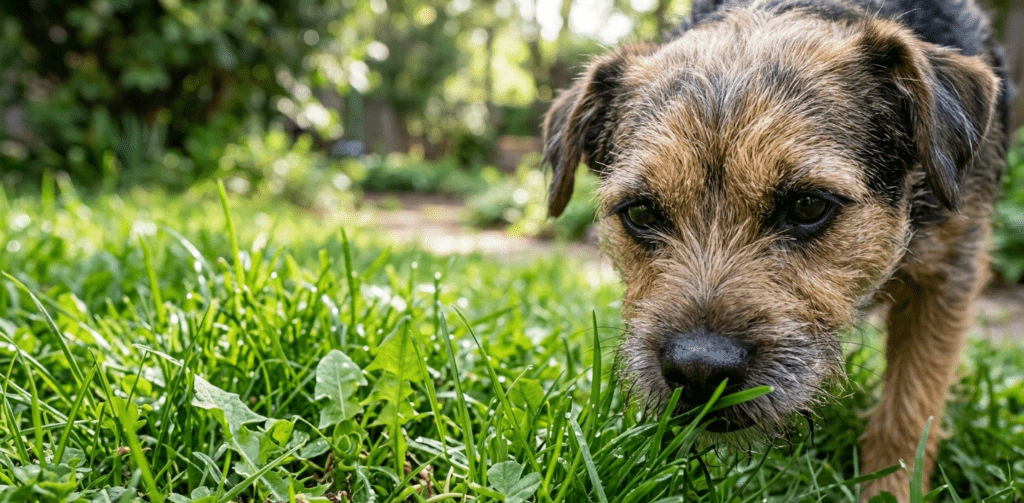
While most grass-eating is harmless, sudden, frantic grazing followed by vomiting can point to an acute gastrointestinal issue.
The Self-Medication Theory: If a dog has eaten something toxic or heavy, the texture of long, tickly grass blades can mechanically trigger their gag reflex, helping them clear their stomach.
The Medical Warning: If your dog is eating grass while showing other signs of systemic illness, it requires attention. For example, if your pet is lethargic, grazing frantically, and you notice their dog eye is red, they may be dealing with systemic inflammation, allergies, or an infection that needs immediate veterinary care.
Anxiety and sensory overload can manifest in unexpected ways, including a sudden desire to chew or graze on outdoor plants to release stress.
Adrenaline Releases: Major routine disruptions can cause a spike in cortisol. If your dog races outside and begins grazing right after the stressful events described in why do dogs lick themselves after a bath, they are likely using the chewing motion as a displacement behavior to lower their heart rate.
Correcting Boredom Grazing: If the habit is purely behavioral, you can curb it using the structured focus techniques found in our in-home dog training tips. Redirecting them to a chew toy the moment their nose drops to the grass works wonders.
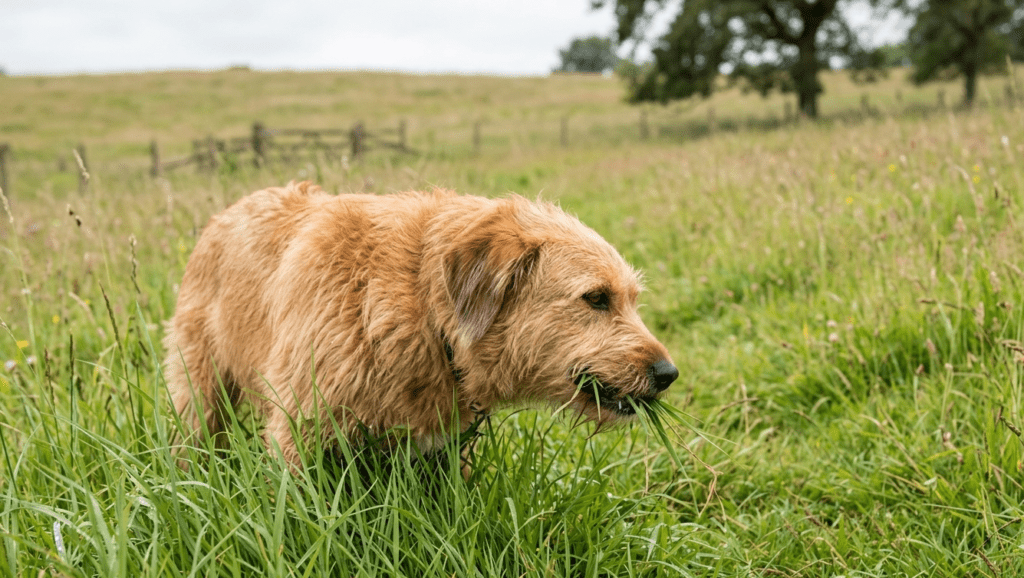
The grass itself isn’t what usually hurts your dog—it’s what is on the grass. Never allow your dog to graze on public parks or manicured lawns that may have been treated with pesticides, herbicides, or chemical fertilizers. Additionally, stagnant grass can harbor dangerous parasites, including hookworms, roundworms, or slugs carrying lungworm larvae.
Less than 25% of dogs actually vomit after eating grass. When they do, it is usually because they swallowed the grass blades whole rather than chewing them, which irritates the stomach lining and triggers a physical reflex.
Dogs are picky grazers! They usually prefer broad-leafed, fresh green grass (like crabgrass or young shoots) because it contains more moisture and has a sweeter taste compared to dry, coarse lawns.
Yes, if done in massive quantities. If a dog ingests large clumps of grass along with dirt or roots, it can form a dense mass (a phytobezoar) in the stomach or intestines that might require surgical removal.
It is best to discourage puppies from grazing. Their immune systems are still developing, making them highly vulnerable to intestinal parasites and parvo vectors left behind by other animals on outdoor grass.
Watching your dog eat grass is generally nothing to lose sleep over. In most cases, it is a harmless vestige of their wild ancestors or a simple craving for a little extra fiber. However, keeping an eye on the franticness of the behavior and ensuring the grass is free from chemical sprays is essential for their safety. For more scientific data on unusual dietary habits, check out the UC Davis Veterinary Medicine study on grass-eating dogs.