
Why is My Dog's Eye Red? (Veterinary Care & Causes)
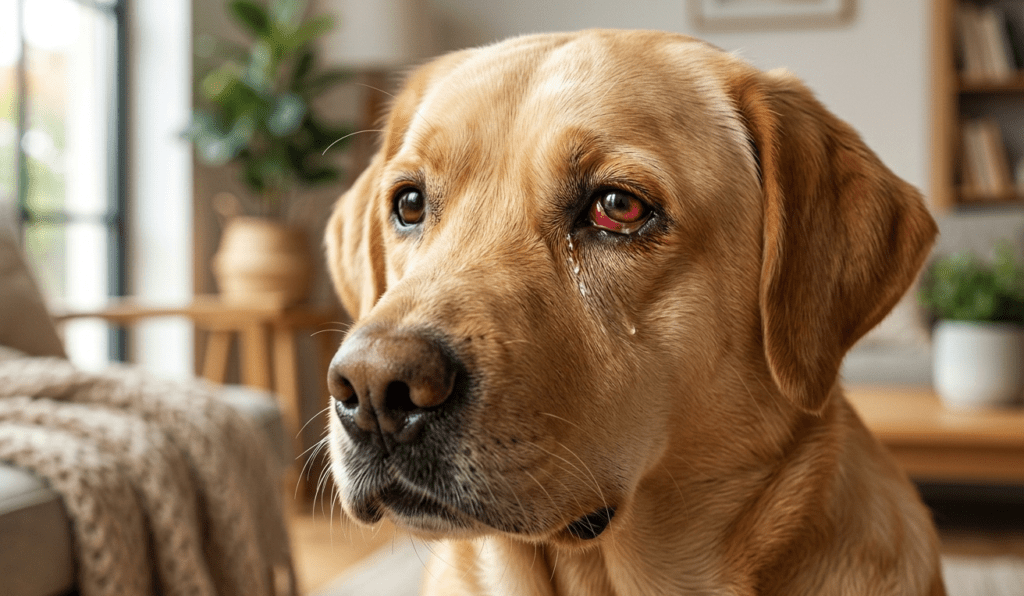
As a pet owner, noticing a sudden change in your dog’s face can be scary. You might find yourself asking, ‘why my dog eye is red?’ and whether it’s a minor irritation or a serious medical emergency.
Discovering that your dog has a bloodshot, swollen, or weeping eye can be alarming. Because the canine eye is incredibly sensitive, redness is a universal symptom for a wide variety of issues—ranging from mild environmental allergies to vision-threatening medical emergencies. Understanding how to evaluate the redness can help you decide whether to monitor your pet at home or rush to an emergency clinic.
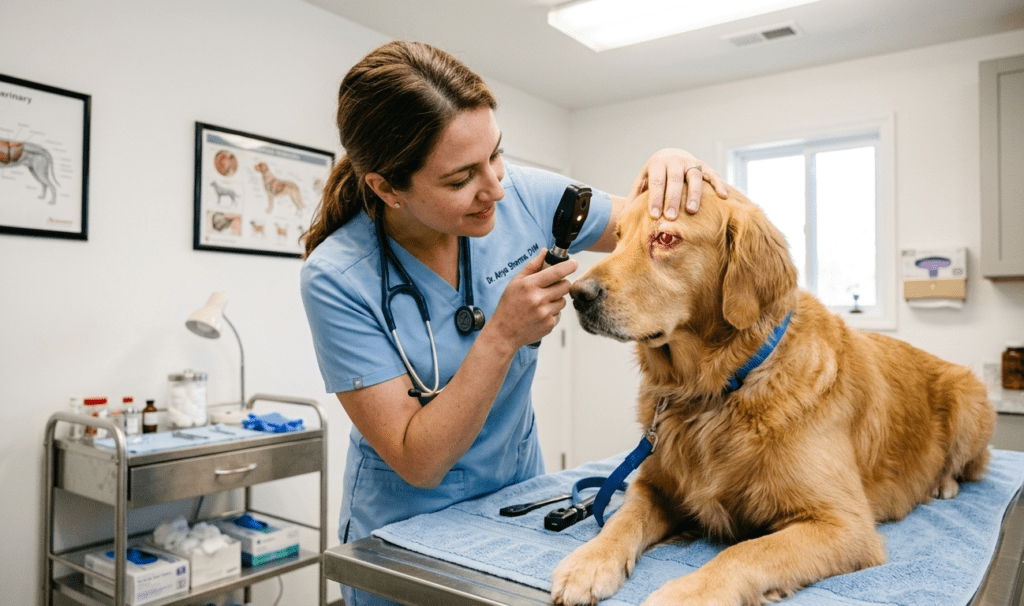
I once treated a golden retriever mix named Barnaby whose left eye was completely crimson. His owner thought he had just gotten dirt in it while playing at the park. However, upon performing a Fluorescein Stain Test, we discovered a deep corneal ulcer caused by a sharp blade of grass. Had the owner delayed the vet visit by even one more day, Barnaby could have lost his eyesight. This experience highlighted why eye issues should never be treated with guesswork.
Common Causes of Ocular Redness
A dog’s eye can turn red due to inflammation in different parts of the ocular anatomy. Identifying the specific presentation of the redness can give you a clue about the underlying issue.
Conjunctivitis (Pink Eye): This is an inflammation of the membrane covering the eye, usually caused by allergies, bacterial infections, or foreign irritants like shampoo.
Corneal Ulcers: A scratch on the surface of the eye, often caused by rough play, running through brush, or persistent scratching.
The Post-Bath Connection: Ocular irritation frequently happens right after grooming. If you notice eye redness alongside the behaviors discussed in why do dogs lick themselves after a bath, your dog may have gotten soap residue in their eye, causing chemical conjunctivitis.
Behavioral Reactions to Eye Pain
Dogs cannot tell us when their eyes hurt, so they communicate distress through physical and behavioral shifts.
Blepharospasm (Squinting): If your dog is squinting, holding their eye shut, or sensitive to light, it is a definitive sign of ocular pain.
The “Poking” Sensation: A dog with an eye injury or a foreign body trapped under their eyelid will often paw frantically at their face or rub their head against the furniture. They will act erratically, reacting exactly as if something is poking them due to the sharp, localized discomfort in the orbital area.
Safe Handling and Evaluating Your Dog at Home
Before inspecting your dog’s eye, you must prioritize safety. An injured eye is incredibly painful, and even the gentlest dog might snap if handled roughly.
Restraint Techniques: Approach your dog calmly. If your pet has undergone basic obedience via in-home dog training tips, utilize a solid “stay” or “settle” command before attempting to flush or examine the eye area.
First Aid Limit: You can gently flush the eye with a sterile, plain saline solution (with no medication added) to remove loose debris, but never attempt to scrape anything off the cornea yourself.
Emergency Check: The "Red Alert" Symptoms
If your dog’s red eye is accompanied by any of the following symptoms, bypass home remedies and see a veterinarian immediately:
The eye appears cloudy, milky, or bluish.
One pupil is noticeably larger or smaller than the other.
The eyeball looks swollen or protrudes further than the normal eye.
Thick, green, or yellow discharge is leaking constantly.
The dog is in obvious agony (crying, hiding, or refusing to open the eye).
Frequently Asked Questions (FAQs)
Can I use my human eye drops (like Visine) on my dog's red eye?
Never use human medications on a dog’s eye. Drops like Visine work by constricting blood vessels, which can cause severe complications or interactions if your dog has an undiagnosed condition like glaucoma or an ulcer.
What is "Cherry Eye" and does it cause redness?
Cherry Eye is the prolapse of the gland of the third eyelid. It appears as a bright red, fleshy mass in the inner corner of the eye. While it looks dramatic, it is usually painless, though it requires surgical correction to protect the eye’s long-term moisture production.
How do vets diagnose the exact cause of a red eye?
Vets use three core tests: a Schirmer Tear Test to measure moisture production, a Fluorescein Stain to look for corneal scratches, and a Tonometry Test to measure intraocular pressure for glaucoma.
Can allergies cause both eyes to turn red?
Yes. If both eyes are mildly red, watery, and accompanied by sneezing or paw-licking, environmental allergies (pollen, dust, mites) are the likely culprit. If only one eye is red, it is more likely a localized trauma or foreign object.
Final Thoughts
Ocular issues can escalate rapidly. While minor redness from dust can clear up with a gentle saline rinse, persistent squinting, cloudiness, or discharge requires immediate professional diagnostics. Protecting your dog’s vision depends entirely on fast, decisive action. For authoritative medical guidelines on canine ocular health, visit the American College of Veterinary Ophthalmologists (ACVO) owner resources.