
Thunderstorms can be a nightmare for pet parents. If you notice your dog shaking, hiding, or pacing whenever the sky turns dark, you aren’t alone. Many owners often ask, “My dog is scared of thunder what to do?” The good news is that by addressing their noise phobia and providing a sense of security, you can help them stay calm during the storm.
Thunderstorm phobia is more than just a fear of loud noises; it is a complex reaction to changes in barometric pressure, static electricity, and low-frequency rumbles. For a dog, a storm can feel like an unpredictable threat, leading to pacing, whining, or even destructive behavior.
I once worked with a Border Collie named Skye. Every time a storm rolled in, Skye would try to dig through the bathroom tiles to hide. Her owners were overwhelmed, but by creating a “Safe Den” and using anti-static capes, we helped Skye remain calm during even the heaviest summer storms.
When the sky turns dark, your dog needs a place where they feel protected. This should be an interior room with no windows, like a closet or a basement, or a crate covered with a thick blanket.
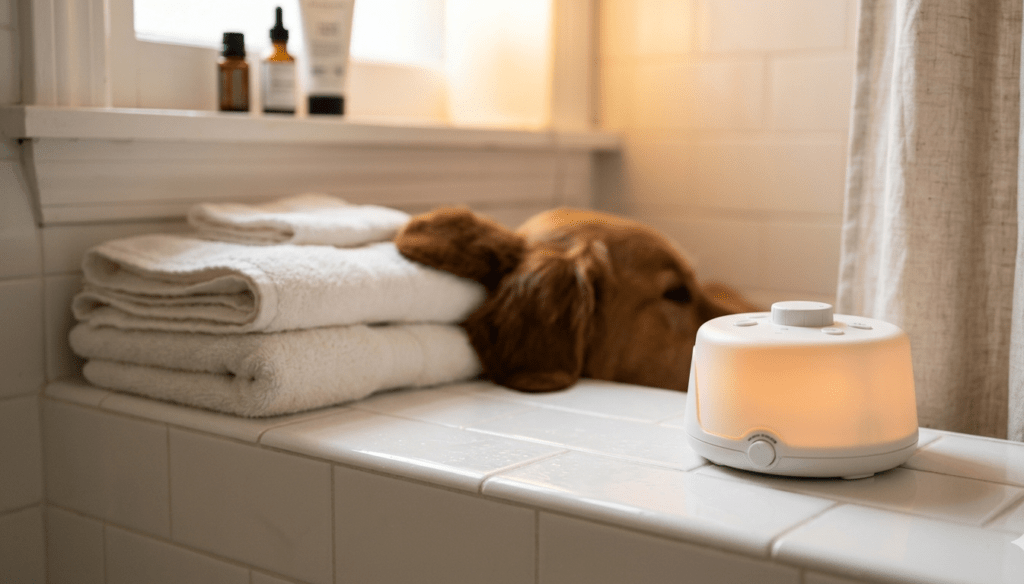
Noise Masking: Use a white noise machine or leave the TV on to drown out the sudden claps of thunder.
The Apartment Challenge: Managing storm anxiety can be especially difficult in small spaces. If you are also following the best way to potty train a puppy in an apartment, you might find that a storm completely disrupts their progress, as puppies often refuse to go outside when they feel the pressure change.
Anxiety doesn’t always look like shaking or hiding. Sometimes, dogs use repetitive oral habits to self-soothe during a stressful event.
Obsessive Licking: If the storm causes significant digestive upset or high stress, you might notice your dog keeps licking carpet after eating or during the thunder. This is a “displacement behavior” used to release endorphins and calm their nervous system.
The “Poking” Sensation: High static electricity in the air before a storm can make a dog’s fur tingle. They may jump or snap at the air as if something is poking them, which is often a precursor to a full-blown thunder panic.
How you act during a storm tells your dog how they should act. Stay calm, speak in a normal voice, and reward settled behavior.
Desensitization: During the off-season, play recordings of storm sounds at a very low volume while giving your dog high-value treats.
Consult your Vet: If your dog becomes self-destructive or hyperventilates, they may need Sileo or other short-acting anti-anxiety medications.
Many dogs aren’t just scared of the noise; they are uncomfortable with the static electricity buildup in their fur. Rubbing your dog down with a pet-safe dryer sheet (or just a damp cloth) can help neutralize the static. This is the same logic we use to remove dog hair from car upholstery—controlling static makes the environment much more manageable!
Yes! The old myth that “comforting reinforces fear” is false. You cannot reinforce an emotion. Providing a calm, reassuring presence helps your dog feel safe.
For many dogs, yes. It works on the principle of Maintained Pressure, similar to swaddling a baby, which has a calming effect on the sensory system.
Absolutely. Fear causes the “fight or flight” response, which can relax the bladder muscles. If this happens, treat it as a medical accident rather than a training failure.
Bathtubs (especially porcelain or fiberglass) are often grounded, meaning they protect the dog from the static electricity in the air.
Managing thunder phobia is about preparation and patience. By providing a safe space and understanding the secondary behaviors triggered by stress, you can help your dog weather the storm. For more detailed protocols on canine phobias, visit the ASPCA guide on fear of thunder.