
If your dog keeps licking carpet after eating, it could be a sign of indigestion or boredom. Learn how to fix this behavior with our expert guide.
It can be baffling to watch your dog finish a delicious meal and then immediately start obsessively licking the carpet. While it might look like they are just “cleaning up” microscopic crumbs, frequent carpet licking is often a sign of Excessive Licking of Surfaces (ELS), which is frequently triggered by gastrointestinal distress.
I once worked with a Beagle named Cooper who would lick the living room rug for twenty minutes after every dinner. His owners thought he just loved the taste of his food, but Cooper was actually suffering from LPR (Laryngopharyngeal Reflux)—a condition where stomach acid travels back up into the throat. Switching Cooper to a slow-feeder bowl and managing his portions stopped the behavior almost instantly.
The most common trigger for a dog licking the carpet after eating is gastric motility issues. When the stomach produces excess acid to break down a heavy or fast-eaten meal, the acid can irritate the esophagus, causing a “burning” sensation.
The Behavioral Shift: This behavior often starts with the dog flicking their tongue at the air. If you’ve noticed your dog licking air after eating, the shift to the carpet is usually an attempt to swallow fibers that can help “soothe” the scratchy or burning feeling in their throat.
Dietary Factors: Sometimes, the culprit is what they are eating. For instance, while some dairy is okay, you should always double-check can my dog eat yogurt to ensure they aren’t suffering from lactose intolerance, which can worsen acid reflux.
Sometimes, microscopic food particles get stuck in the roof of the mouth (palate) or between the teeth, creating a tingling, irritating sensation known as paresthesia.
Oral Discomfort: If your dog seems frantic while licking the rug, they might feel a sharp sensation as if something is poking them. Always check their gums for stuck debris or kibble shards that might be causing this obsessive behavior.
In some cases, carpet licking is a compulsive disorder or a “displacement behavior” used to cope with stress.
Post-Surgery Stress: Significant life changes or medical procedures can trigger obsessive habits. For example, learning how to stop dog from peeing on rugs after being spayed often involves managing the same stress-related behaviors that lead to obsessive licking.
The Grooming Connection: Obsessive licking isn’t always about the floor. If you’ve ever wondered why does my dog lick their paws and then lick me, it’s part of the same sensory and social feedback loop that involves using their tongue to process their environment.
If your dog licks the carpet mostly in the morning or right before a meal, they might be suffering from Bilious Vomiting Syndrome. This happens when the stomach stays empty for too long, causing bile to irritate the lining. Try feeding smaller, more frequent meals to see if the carpet licking subsides.
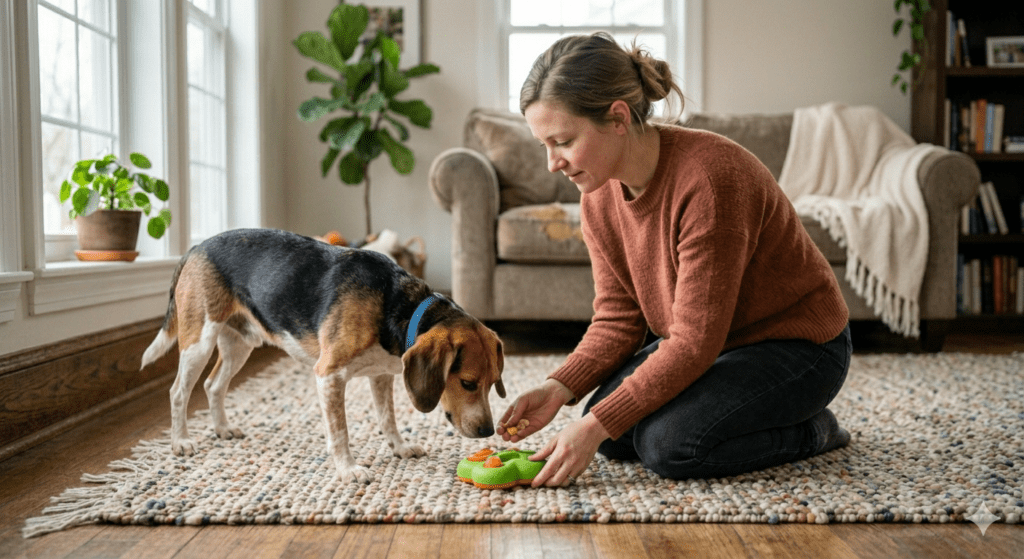
The main danger is the ingestion of carpet fibers, hair, and cleaning chemicals, which can lead to an intestinal blockage or toxicity. It is best to redirect the behavior to a lick mat or toy.
Chewing can be a great distraction, but you must be careful with the type of bone. Always research can dogs eat raw chicken bones safely before using them as a dental or behavioral tool.
Use enzymatic cleaners that are pet-safe and free from harsh detergents. If you are struggling with fur buildup, learn how to remove dog hair from car upholstery without a vacuum, as the same rubber-squeegee techniques work perfectly on home rugs.
Carpet licking after a meal is usually a physical signal rather than just a “naughty” habit. By addressing the root cause—whether it’s acid reflux, dental debris, or stress—you can protect your rugs and, more importantly, your dog’s health. For more professional insights on compulsive licking, visit the ACVB (American College of Veterinary Behaviorists).